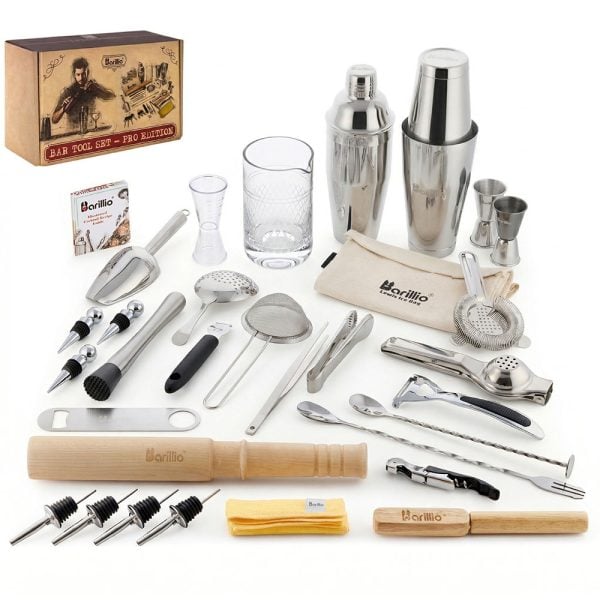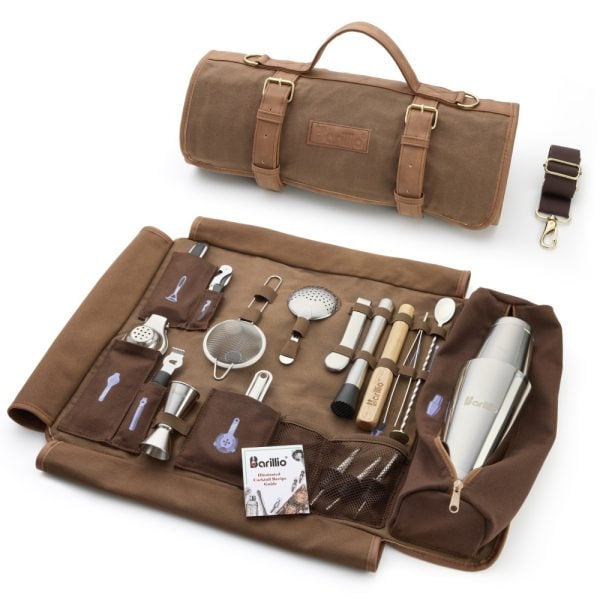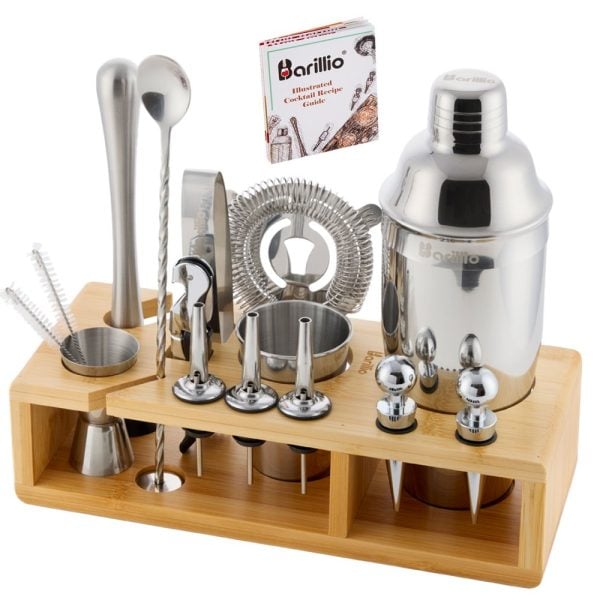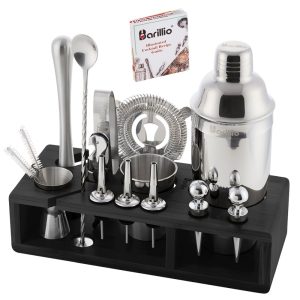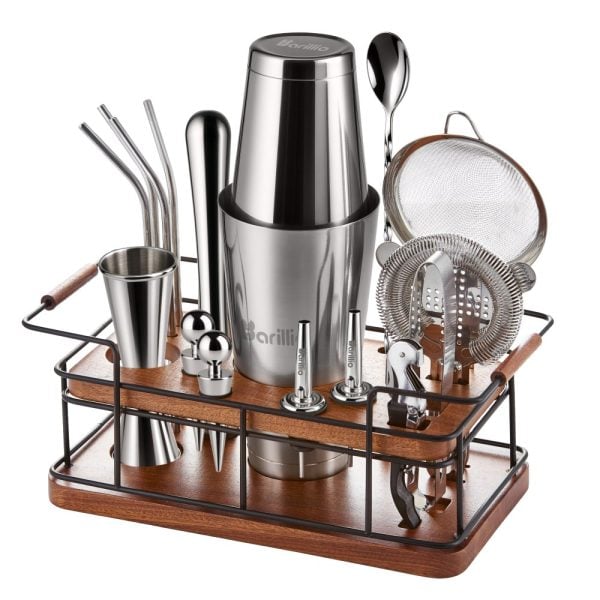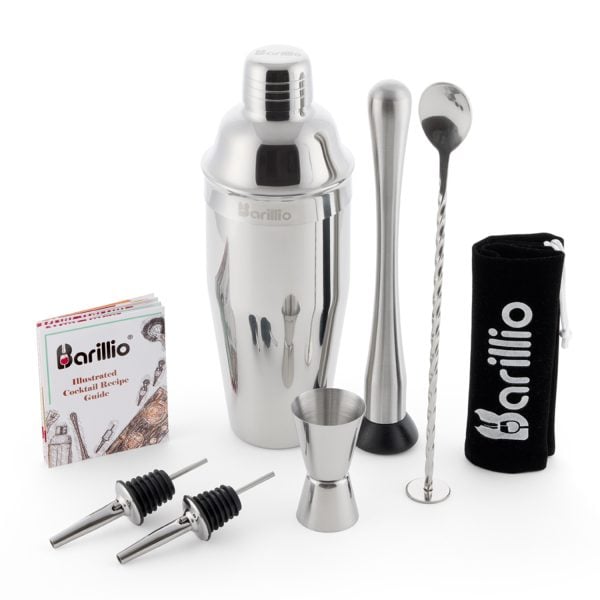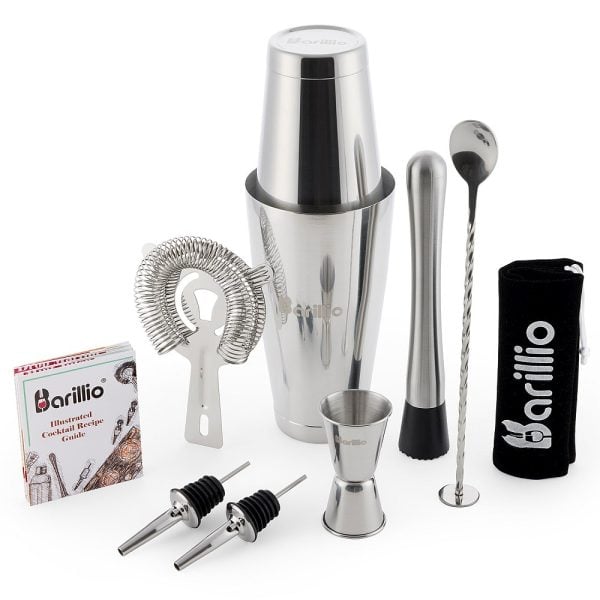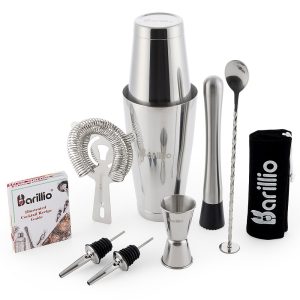
A Boston shaker looks simple because it is simple: two cups that form a temporary seal. The technique becomes much easier once you know where the seal forms, how to hold the tins, and where to tap when it is time to open them.
This guide takes you through the complete process without theatrical slamming or brute force. Practice first with water and ice, then use the same motions when a recipe is in the shaker.
What is a Boston shaker?
A Boston shaker is a two-piece cocktail shaker. A typical tin-on-tin model pairs a larger tin with a smaller tin. Unlike a Cobbler shaker, it has no built-in strainer, so you normally pour through a Hawthorne strainer after shaking.
The two-piece design gives the ice room to travel, is quick to rinse, and avoids the small cap that can become stuck on a Cobbler shaker. If you are still deciding which format suits you, start with our comparison of the main types of cocktail shakers.
Before you shake: measure and build the drink
- Set both tins on a stable, dry surface.
- Measure the ingredients into the smaller tin. A cocktail jigger measurement chart helps when the recipe and tool use different units.
- Add ice last so the drink does not begin diluting while you search for another ingredient.
- Leave enough empty space for the ice and liquid to move. Do not fill either tin to the rim.
If a recipe includes carbonated ingredients, add them after shaking unless the recipe specifically says otherwise. Pressure can build inside a sealed shaker, and carbonation usually loses its texture when shaken.
How to seal a Boston shaker
- Place the larger tin over the smaller tin at a slight angle. The rims should meet on one side rather than sitting perfectly centered.
- Press the larger tin down with the heel of your hand. A firm, controlled push is enough; repeated pounding can make the seal harder to break.
- Lift the joined shaker a few centimeters while supporting both pieces. If the smaller tin stays attached, the seal has formed.
- Wipe any liquid from the outside before shaking so the tins are not slippery.
The offset creates a straight side and a curved side where the two rims separate. Remember that shape: it helps you find the weak point when opening the shaker.
How to hold and shake it safely
Use two hands. Keep one palm over the base of each tin so neither half can travel if the seal changes. Point the shaker away from faces, glassware, and other people. Shake with a short, controlled path rather than a wide swing.
The exact duration depends on the recipe, ice, temperature, and volume. Listen for the ice to move freely and feel the outside become cold. The goal is to chill, dilute, and integrate the drink—not to shake for a ceremonial number of seconds.
How to open a Boston shaker
- Hold the larger tin firmly near its base.
- Find the side where the two rims form the widest curve. Do not strike the straight side where the tins are closest.
- Tap the larger tin with the heel of your free hand just below the point where the rims begin to separate.
- When the seal releases, twist and lift the smaller tin away.
If it does not open on the first try, rotate the shaker slightly and tap the curved side again. Avoid hitting the rim against a counter, which can dent the metal and make future seals less reliable. Warm running water on the outside of the larger tin can help with a stubborn empty shaker, but keep water away from a finished drink.
How to strain the cocktail
Place a Hawthorne strainer over the large tin with the spring facing the drink. Hold it in place with your index finger and pour steadily. For cocktails with citrus pulp, herbs, fruit, or many small ice chips, pour through a fine-mesh strainer as a second filter.
Our cocktail strainer guide explains when a Hawthorne, julep, or fine-mesh strainer makes sense.
Why a Boston shaker leaks
- The rims are wet or have sticky syrup on them before sealing.
- The tins are centered instead of offset, so the contact is uneven.
- The shaker is overfilled and liquid reaches the sealing edge.
- A rim is dented or out of round.
- The two tins are not compatible sizes.
- The seal was tested by pulling one tin without supporting the other.
A simple practice drill
Fill the smaller tin halfway with ice and add a few ounces of water. Seal, lift-test, shake for several seconds, open, and strain into a glass. Repeat until the motions feel predictable. Water makes it easy to spot a weak seal without wasting ingredients.
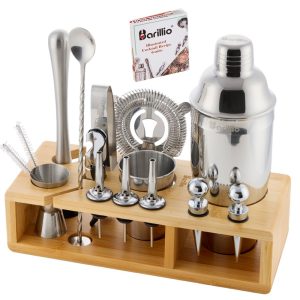
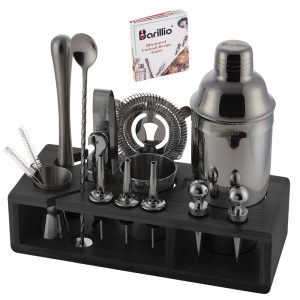
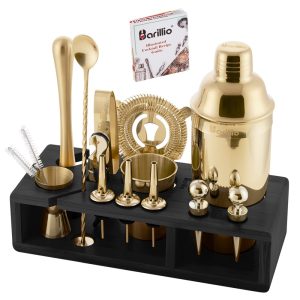
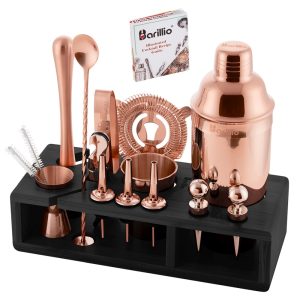
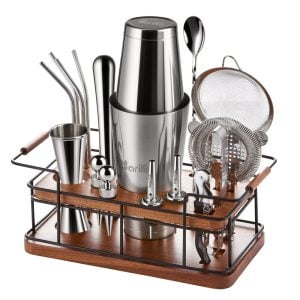
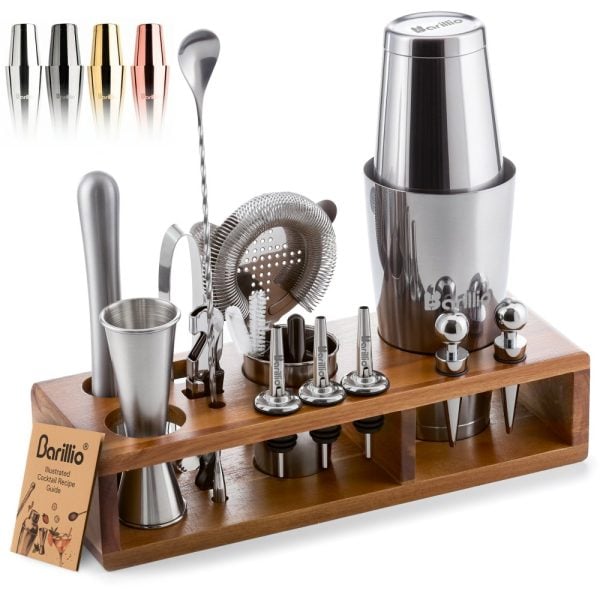
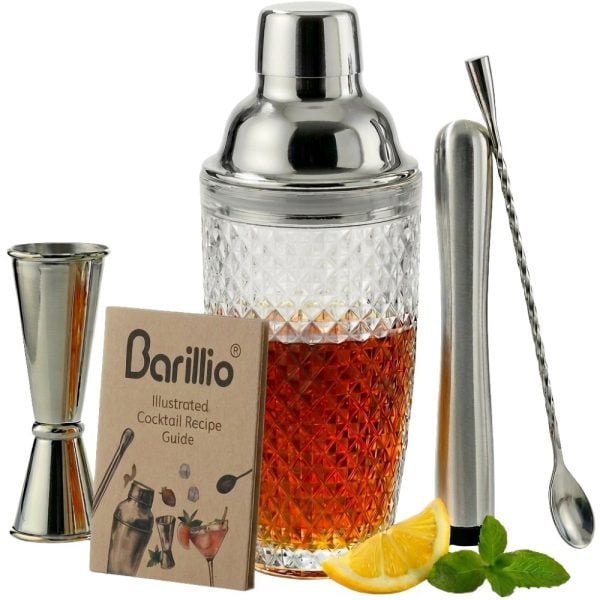
When you are ready to choose equipment, browse the Boston shaker sets or compare them with the wider cocktail shaker collection. The best setup is one whose tins fit cleanly, feel secure in both hands, and pair with a strainer that covers the opening.