A mobile bar is won or lost before the first guest orders. The job may happen in a garden, a rented hall, an office, or a kitchen with one usable counter and no nearby sink. A sensible packing system matters more than bringing every tool you own.
Use this checklist as a starting point, then adjust it to the menu, guest count, venue rules, and service style. The aim is a compact kit with a backup for anything that can stop service.
The core mobile bartender kit
- Two-piece Boston shaker tins for fast shaking and easy rinsing
- A clearly marked jigger that matches the recipe sheet
- Hawthorne strainer for shaken drinks
- Fine-mesh strainer for drinks with pulp, herbs, or small ice chips
- Julep strainer if the menu includes several stirred drinks
- Long bar spoon, muddler, bottle opener, corkscrew, and citrus peeler
- Ice scoop or tongs—never use a glass to scoop ice
- Pour spouts for the bottles used most often
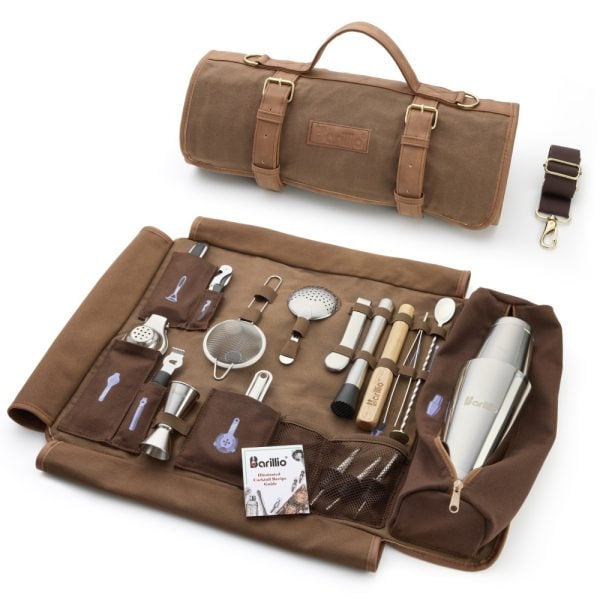
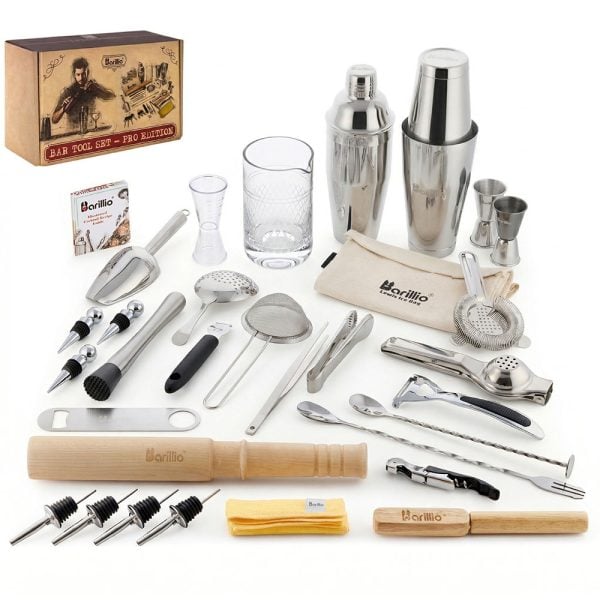
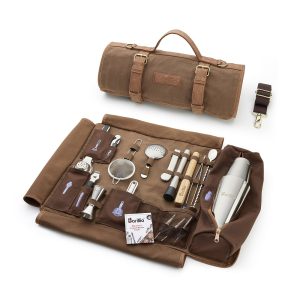
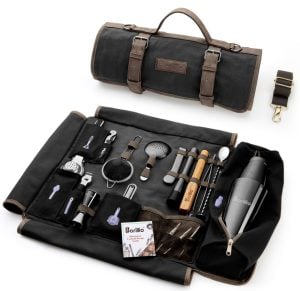
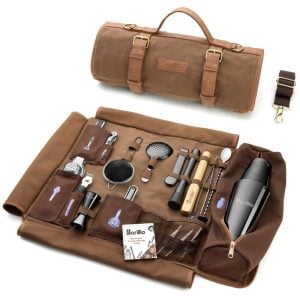
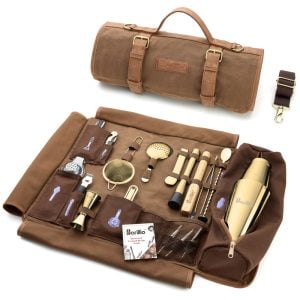
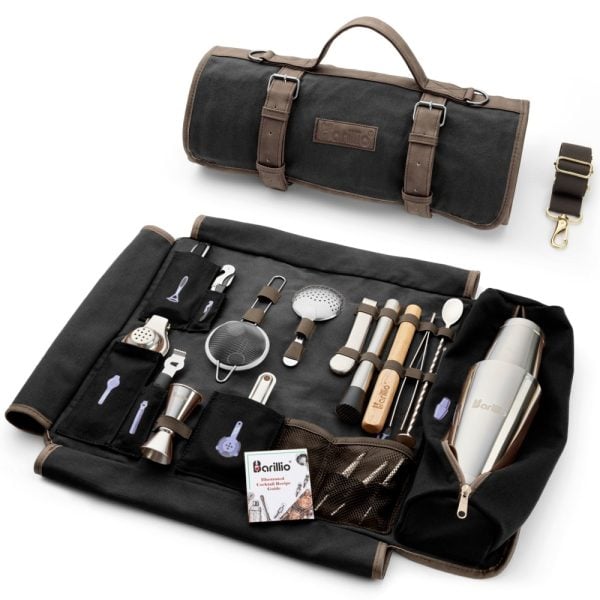
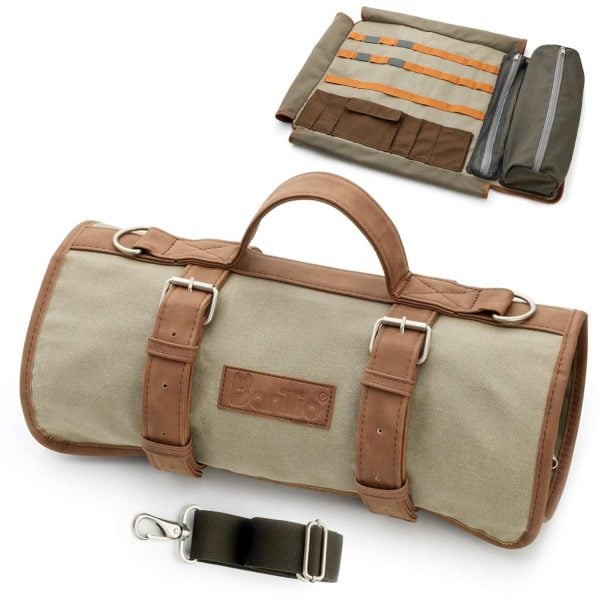
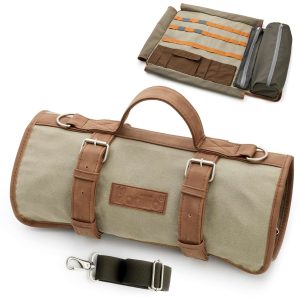
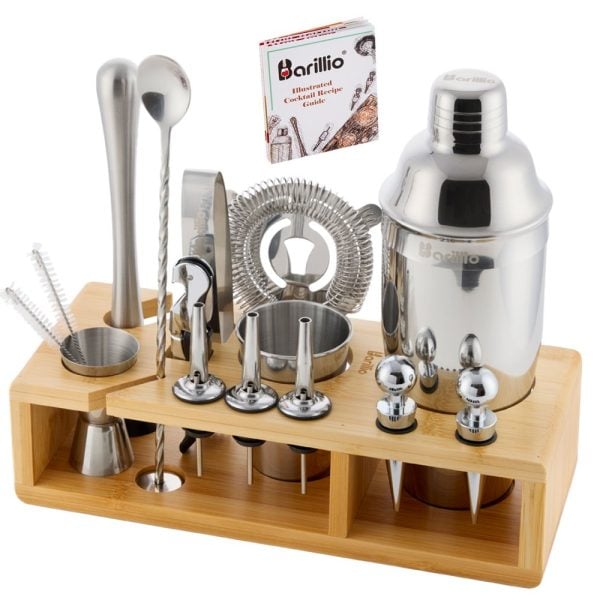
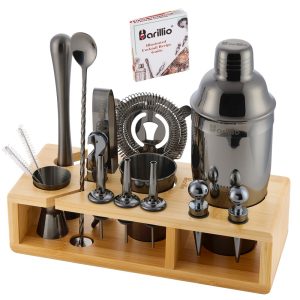
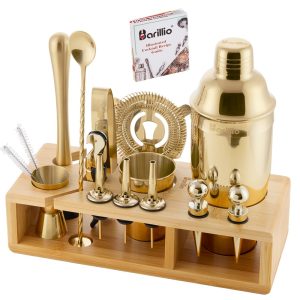
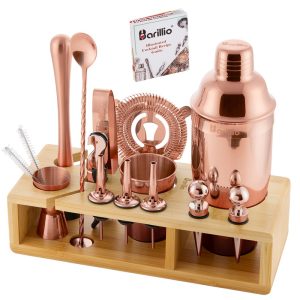
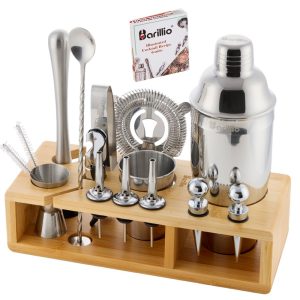
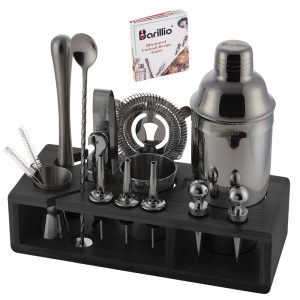
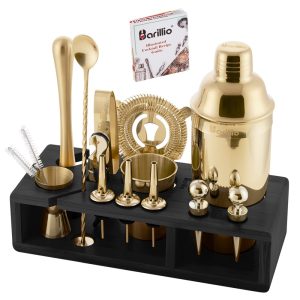
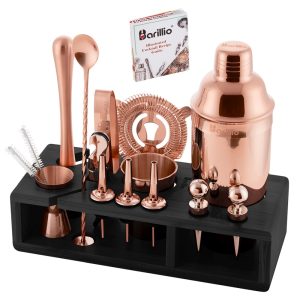
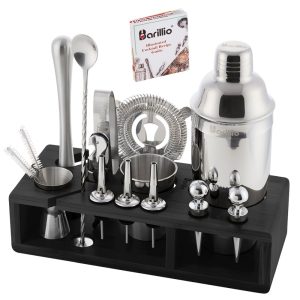
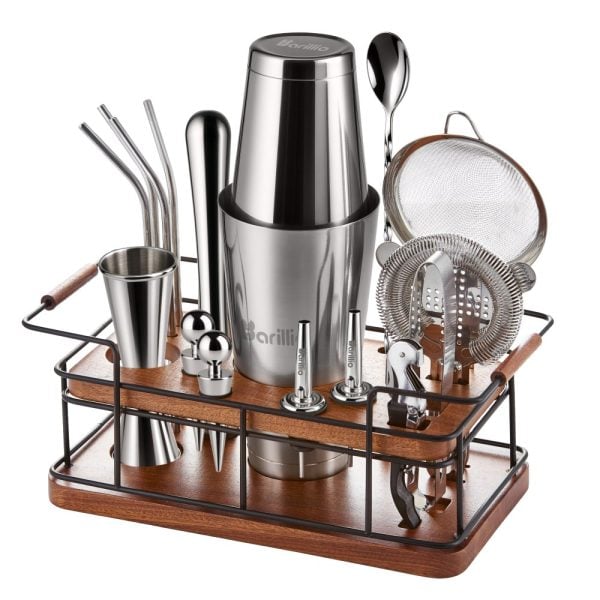
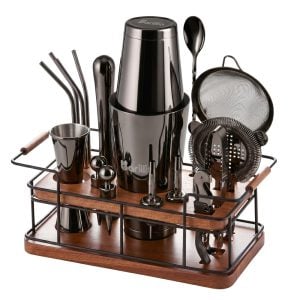
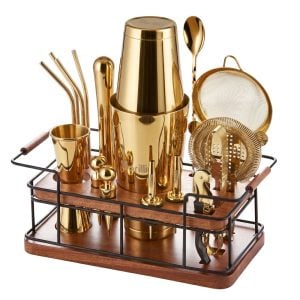
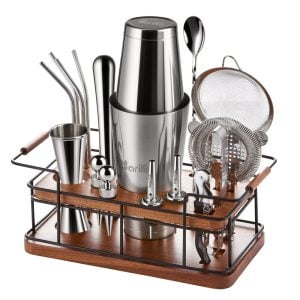
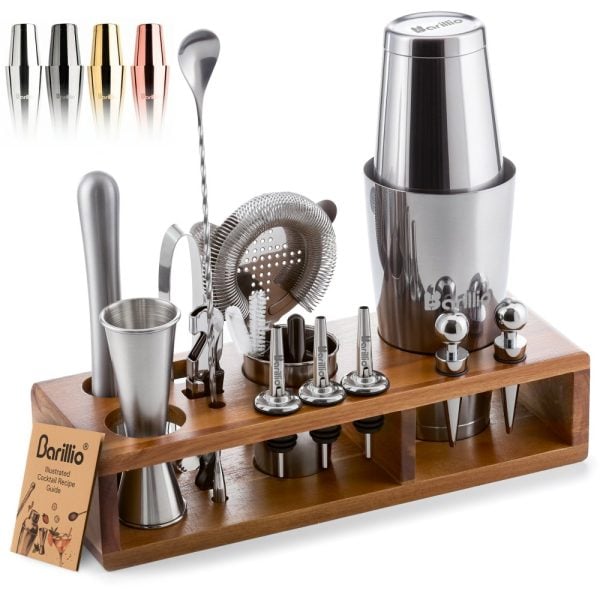
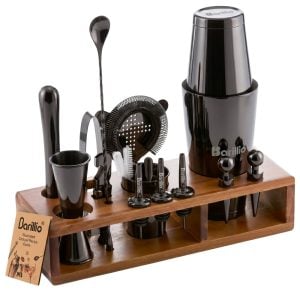
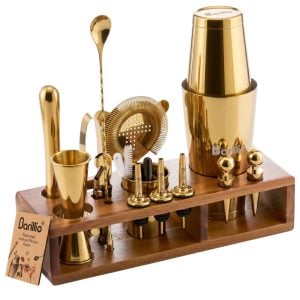
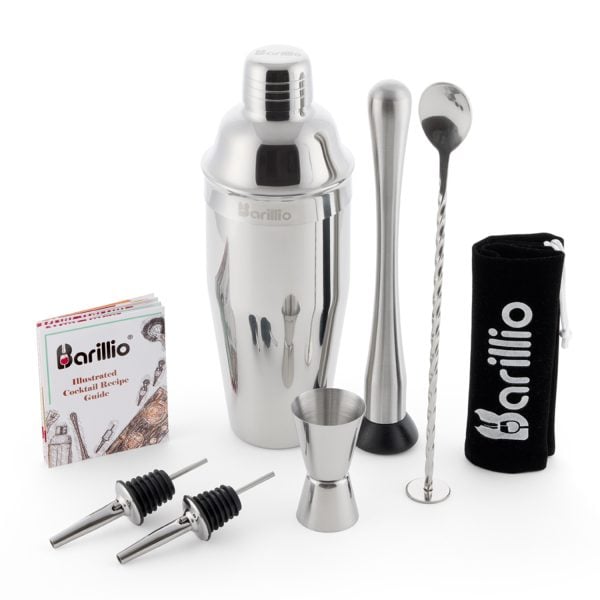
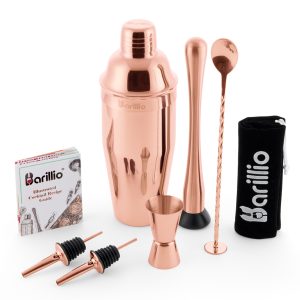
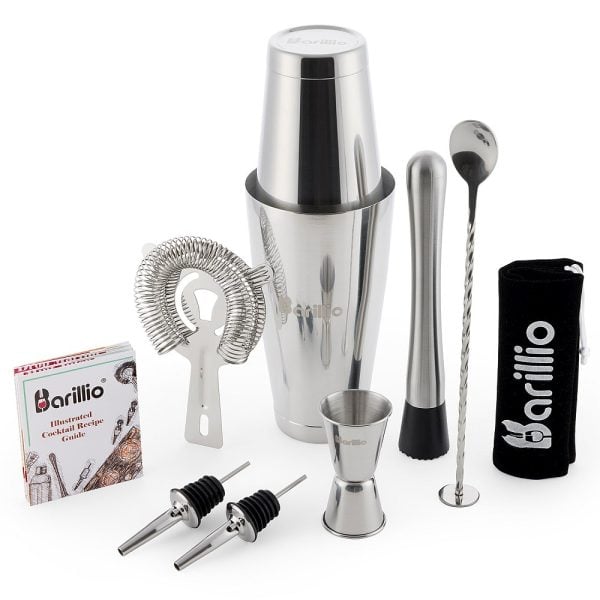
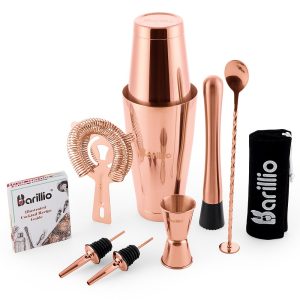
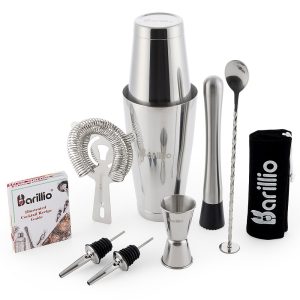
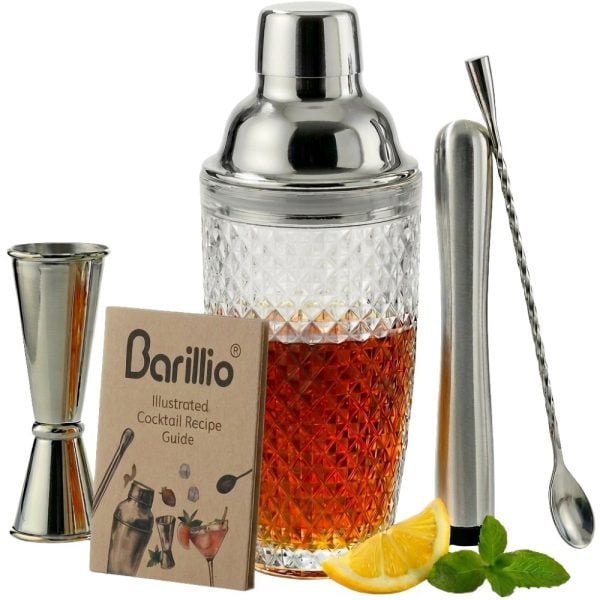
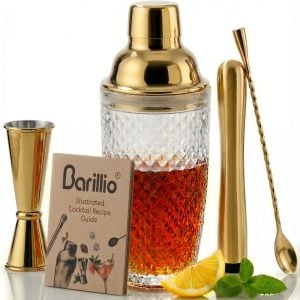
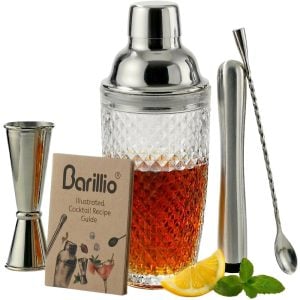
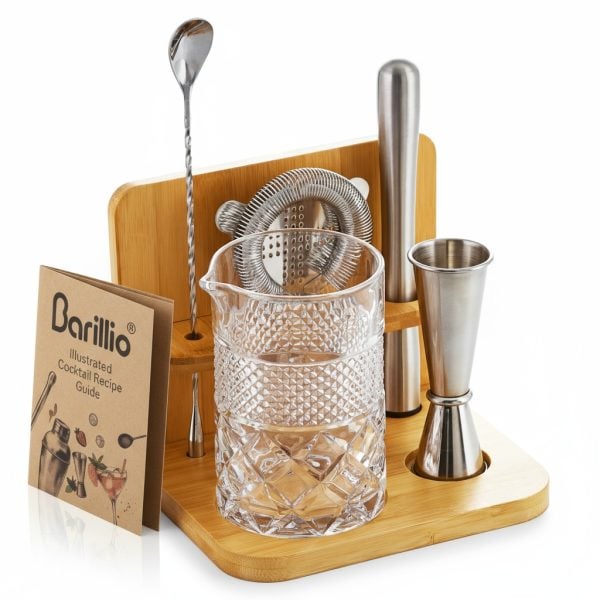
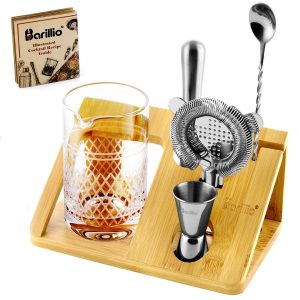
A ready-made travel bartender kit can simplify this foundation. Barillio’s set includes weighted 18-ounce and 28-ounce Boston tins, a 3/4-ounce and 1 1/2-ounce jigger, Hawthorne, julep, and fine-mesh strainers, plus the small tools needed for prep and service. If you already own tools you trust, an empty bartender bag lets you build the layout yourself.
Ingredients and service supplies
- Spirits, liqueurs, wine, beer, and alcohol-free options from the confirmed menu
- Fresh citrus, juices, syrups, bitters, soda, tonic, and still water
- Prepared garnishes in labeled, food-safe containers
- Enough clean ice for shaking, stirring, and serving—planned separately
- Appropriate glassware or approved disposable cups
- Cocktail napkins, straws or stirrers where needed, picks, and coasters
- Printed recipe and allergen notes that can be read at a glance
The small backups that save an event
Bring a second jigger, bottle opener, wine key, bar spoon, and strainer. These items are small, inexpensive to carry, and difficult to replace once service has started. Add spare pour spouts, towels, food-safe gloves, pens, labels, tape, a small flashlight, and a phone charger or power bank.
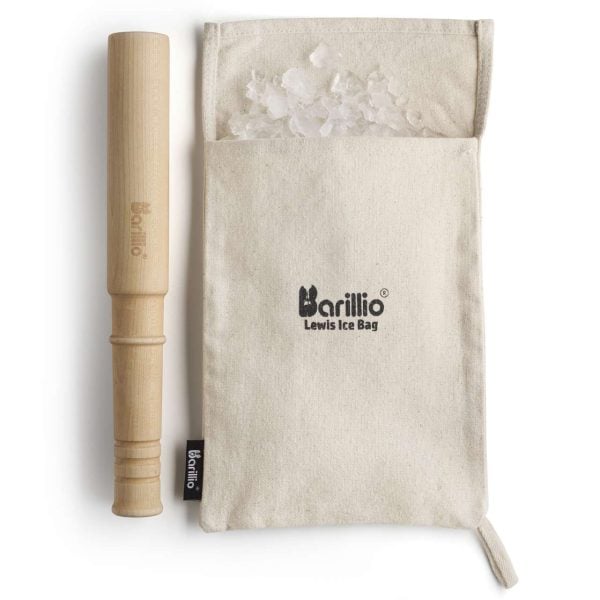
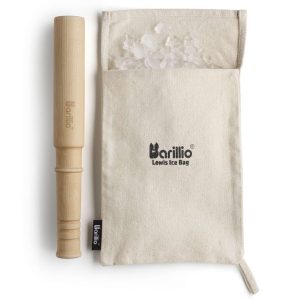
For recipes with mint, berries, or crushed ice, include a sturdy muddler and a Lewis bag or other suitable ice-prep method. The muddler and Lewis ice bag kit keeps those functions together without taking over the bag.
Sanitation and cleanup
- Clean bar towels in separate dry and wet groups
- Food-safe sanitizer and a clearly labeled spray bottle where the venue permits it
- Hand sanitizer and access to hand-washing supplies
- Trash bags, recycling bags, and a container for broken glass
- Bus tubs or lidded bins for dirty tools and glassware
- A small mat or tray to contain drips when the venue has a delicate surface
Confirm the venue’s sink, waste, and ice arrangements in advance. A beautiful kit does not compensate for discovering that the only sink is across a crowded room.
Pack in the order you will use it
Place setup items near the top: bar mat, towels, menu, pour spouts, openers, and the first set of tools. Keep leak-prone liquids upright and isolated. Heavy tins and bottles belong low and close to the center of the bag. Garnishes and chilled ingredients should travel in separate insulated containers when necessary.
Use the same pocket for the same tool at every event. A consistent layout reduces searching during service and makes the final inventory much faster. Before leaving, count the high-risk items—jiggers, strainers, openers, knives, and small containers—against a short written list.
Build the checklist around the menu
A three-drink menu is usually easier to execute well than an open-ended promise to make anything. Look for shared ingredients and techniques: perhaps one shaken citrus drink, one stirred option, and one alcohol-free highball. That keeps prep focused while still giving guests real choice.
Match the shaker and strainer to the drinks rather than habit. The cocktail shaker guide compares Boston and Cobbler designs. For a quick refresher on ounces and milliliters, keep the jigger measurement chart with the recipe sheet.
A final five-minute check
- Can every menu drink be made if one small tool is lost?
- Are recipes, garnish instructions, and allergens written down?
- Are ice, water, power, sink access, and waste arrangements confirmed?
- Are chilled and breakable items packed safely?
- Do you have a clear plan for closing, counting tools, and transporting dirty equipment?
That final check is the difference between a bag full of equipment and a working mobile bar. Start with the service plan, pack only what supports it, and give the few mission-critical tools a backup.
After each event, revise the checklist while the experience is fresh. Remove equipment that traveled twice without a purpose, record anything that ran short, and replace damaged tools before the next booking. A checklist becomes valuable when it reflects the way you actually work—not when it tries to cover every possible cocktail.
Download the mobile bartender packing checklist
This printable keeps the key information on one page. The same information is available in the article text for screen readers and quick reference.