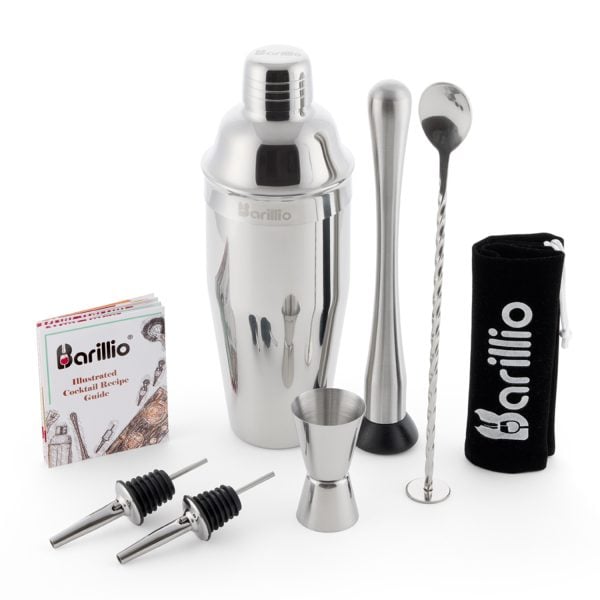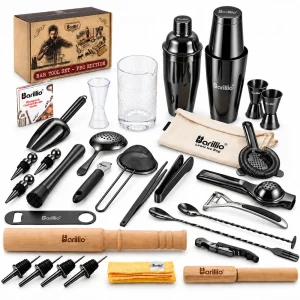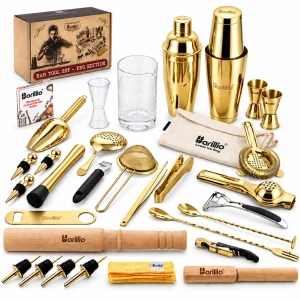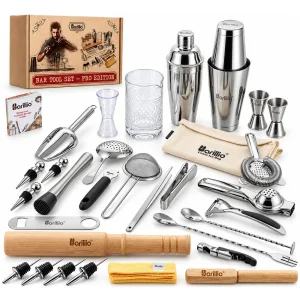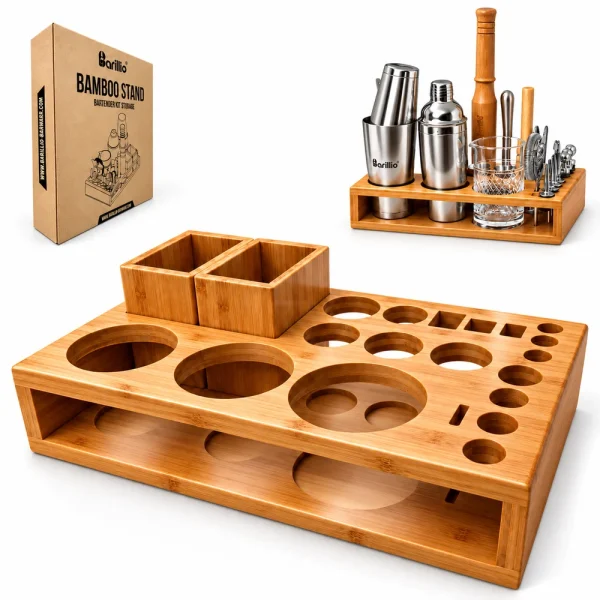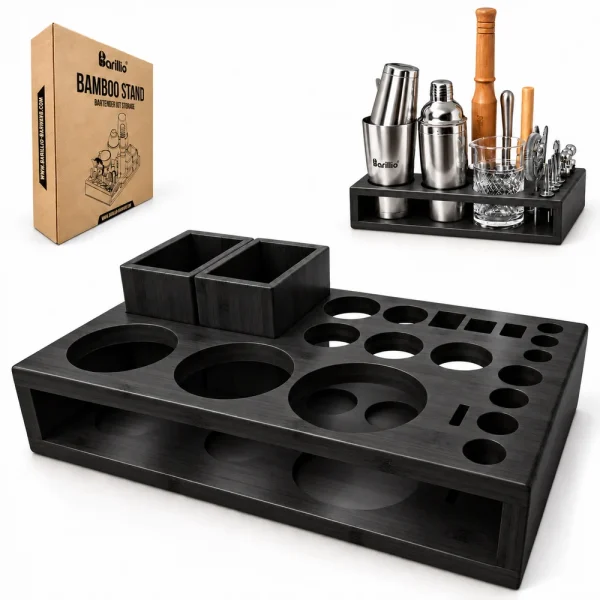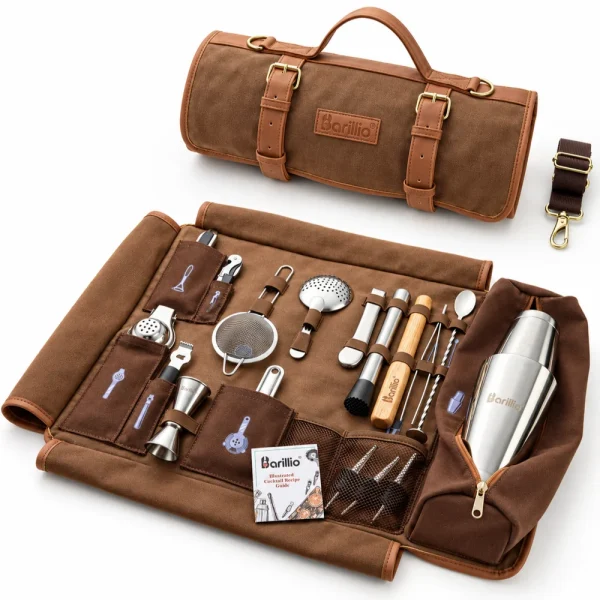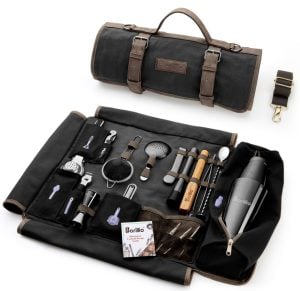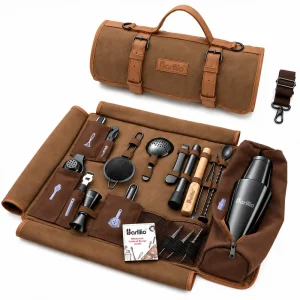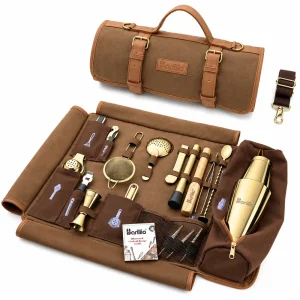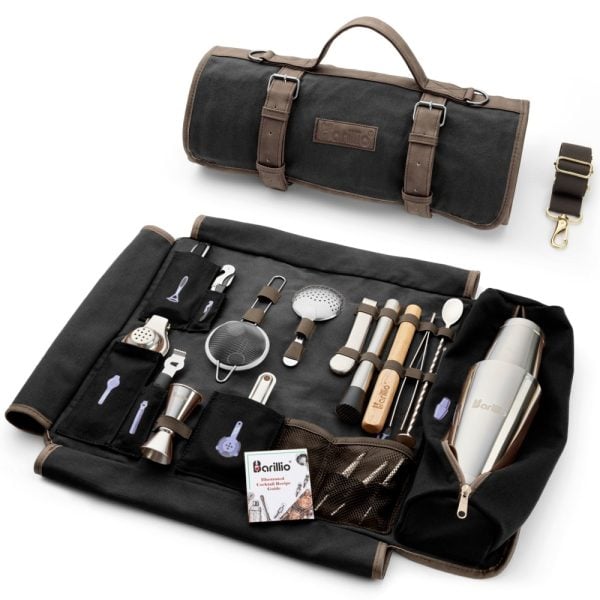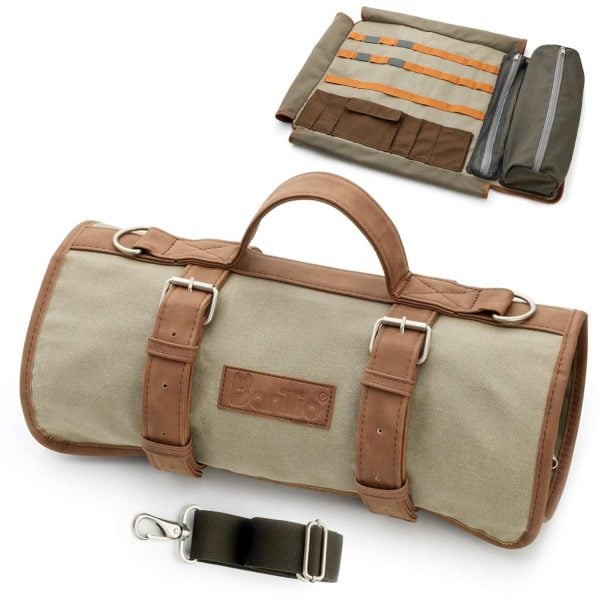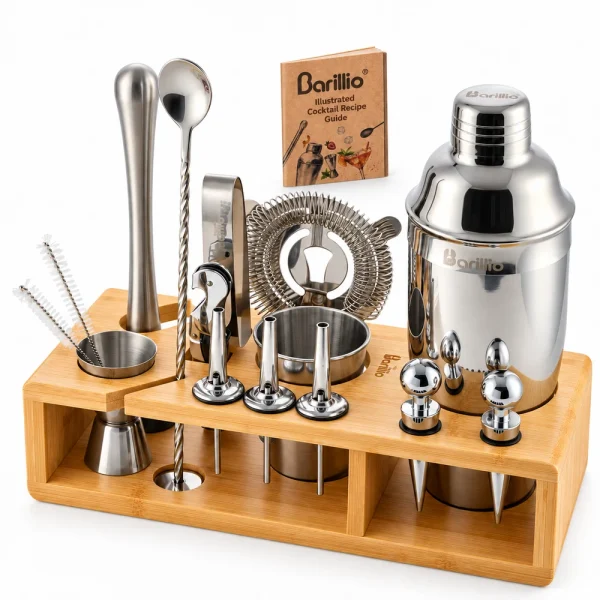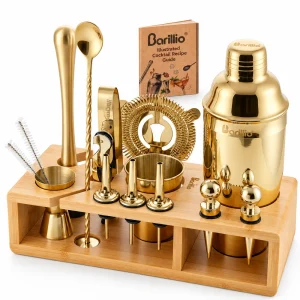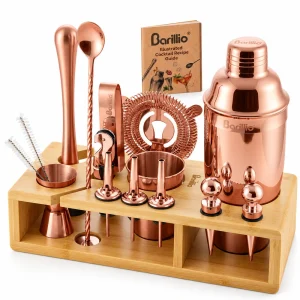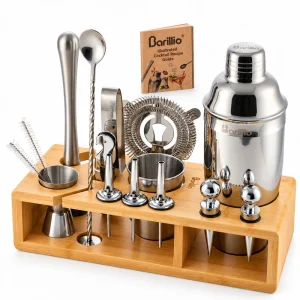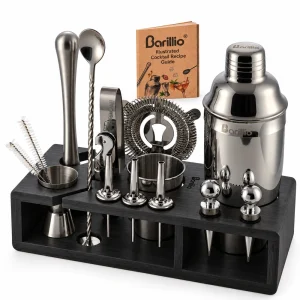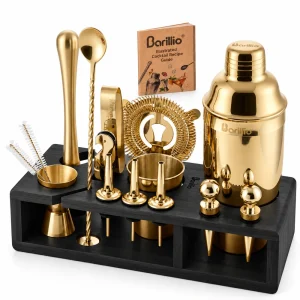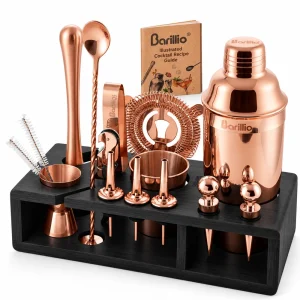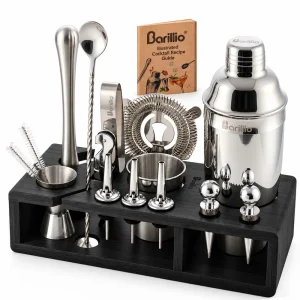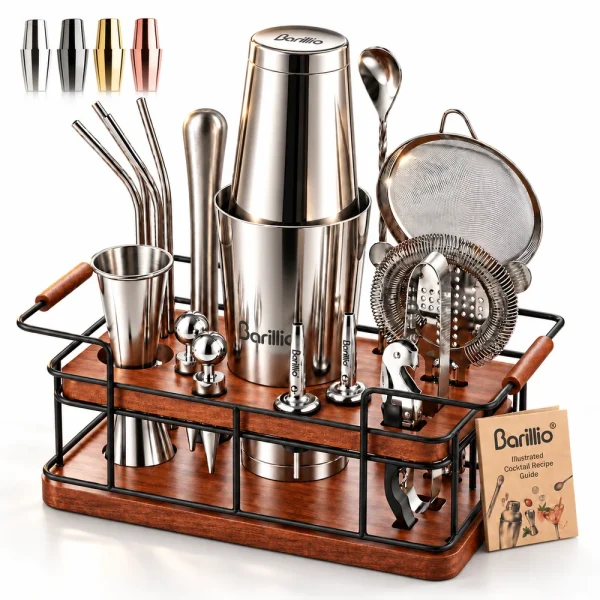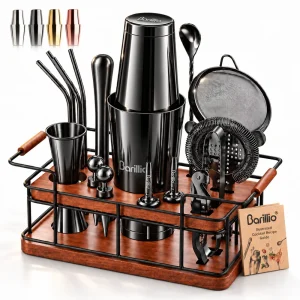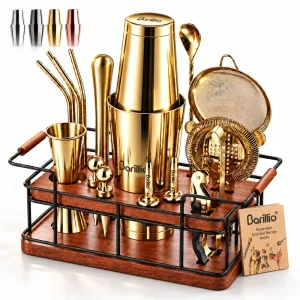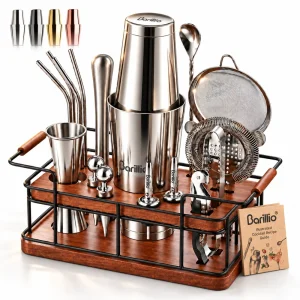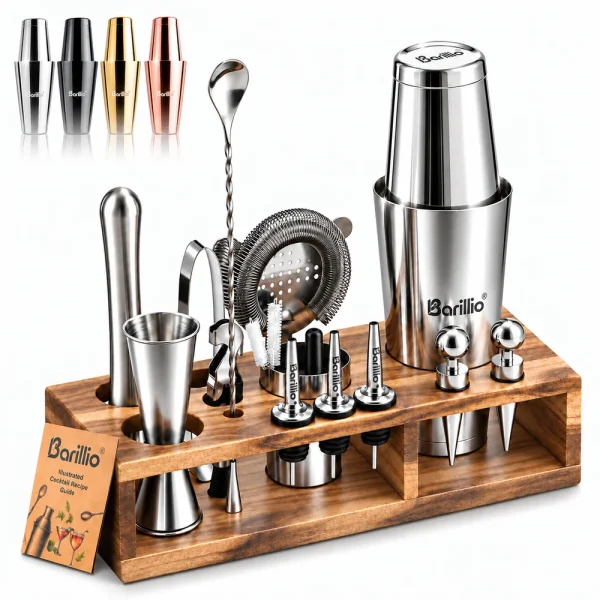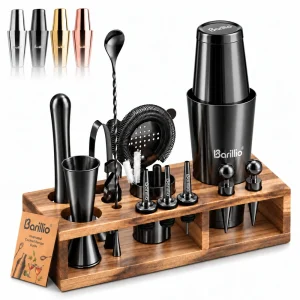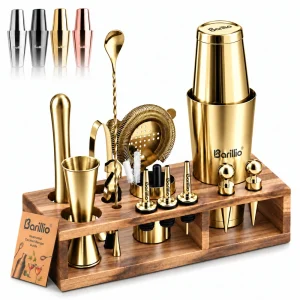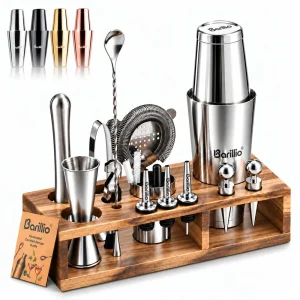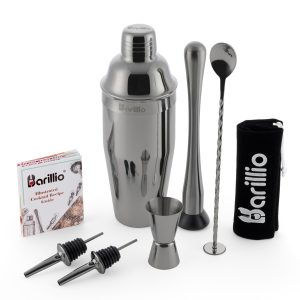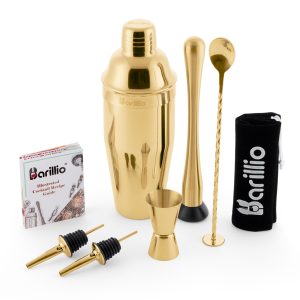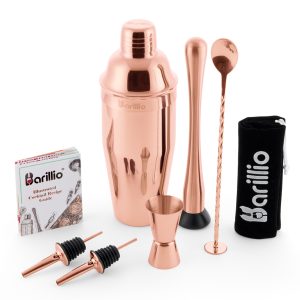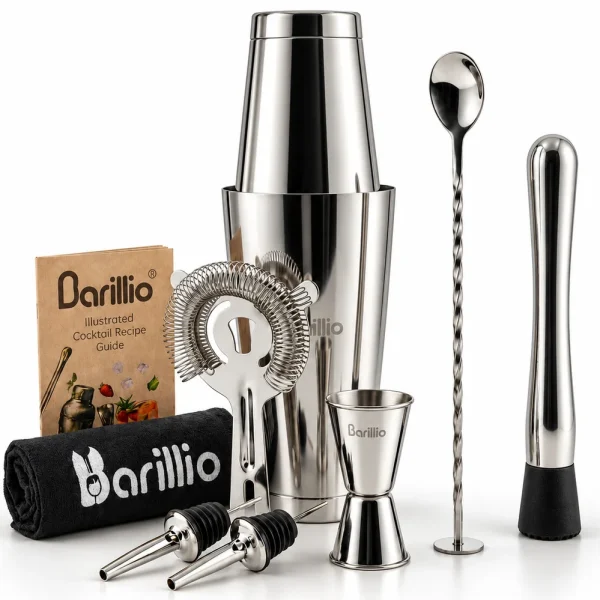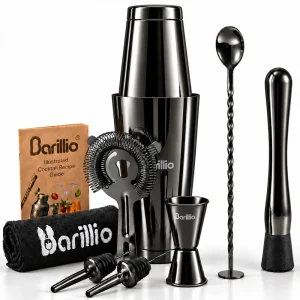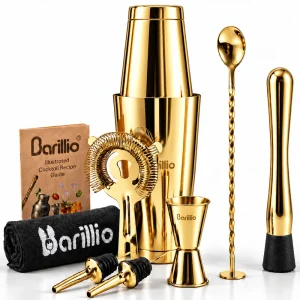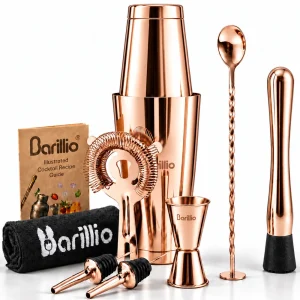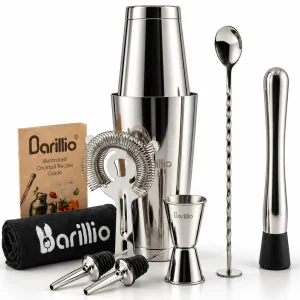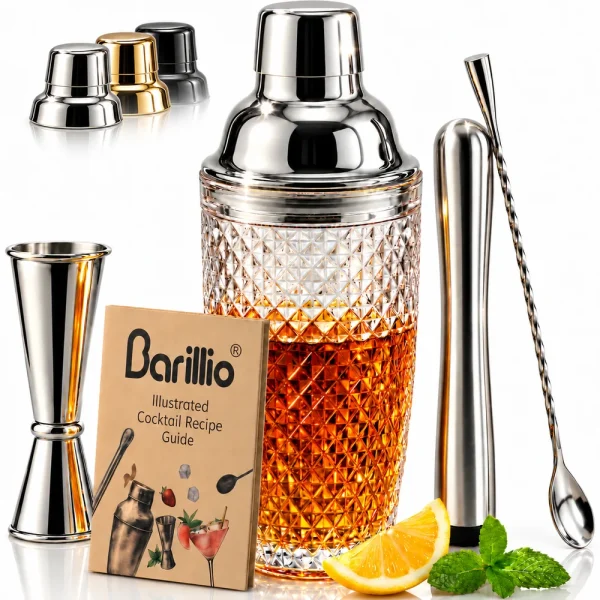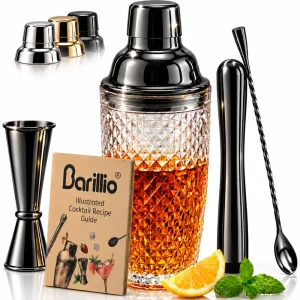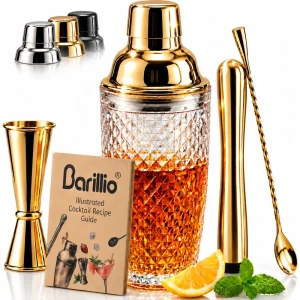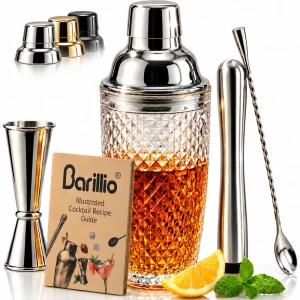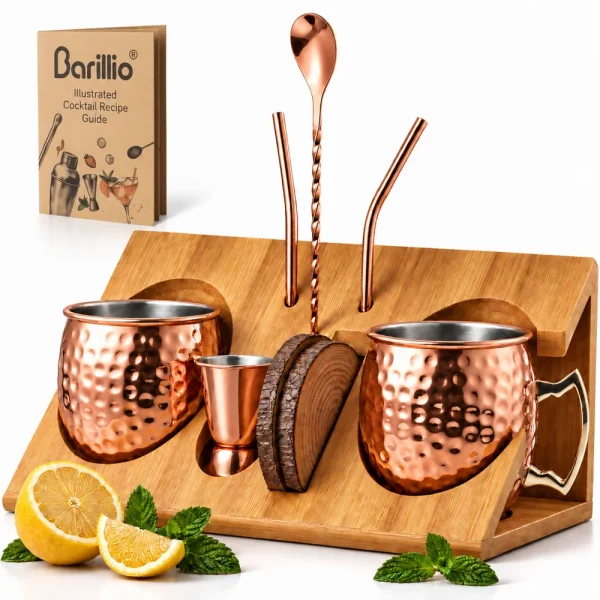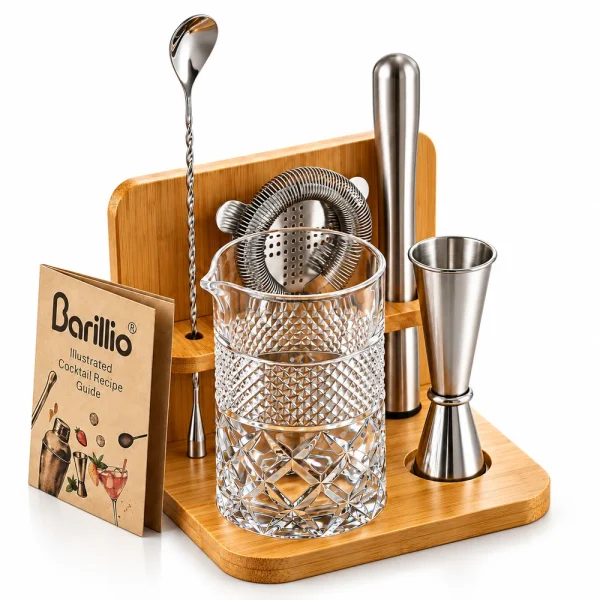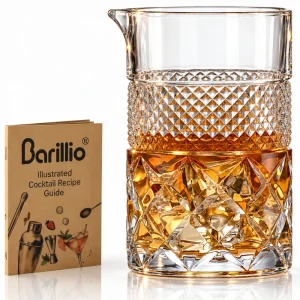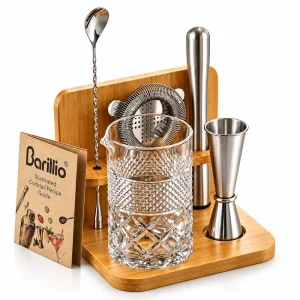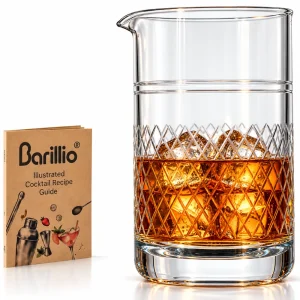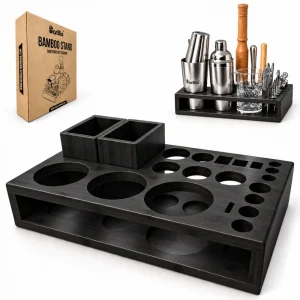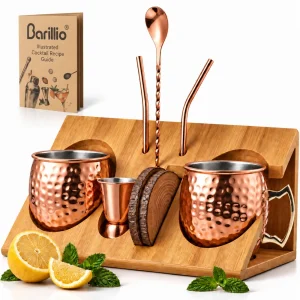
A bartender kit with a stand and a bartender kit with a bag solve different storage problems. The stand keeps tools visible and ready on a bar cart or counter. The bag protects and organizes a portable setup. The right choice starts with where the tools will live, not with the largest piece count.
Quick comparison
| Question | Kit with stand | Kit with bag |
|---|---|---|
| Best location | Home bar, kitchen counter or bar cart | Events, travel or compact storage |
| Tool access | Visible and immediately reachable | Organized pockets opened when needed |
| Space | Needs dedicated surface area | Needs drawer, shelf or travel space |
| Presentation | Designed to stay on display | Designed to roll, carry and protect |
| Main risk | Buying a stand too large for the space | Buying a bag that does not fit existing tools |
Choose a stand when the tools are part of the room
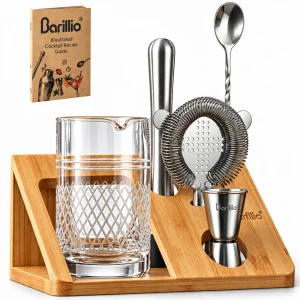
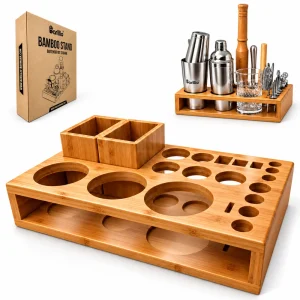
A stand makes sense when the set stays in one place and the display is part of the appeal. It also makes missing tools easy to spot before a gathering. The bartender kits with stands include large 23-piece collections in bamboo, acacia and mahogany formats, plus two separate compact 10-piece bamboo kits built around Boston and Cobbler shakers. For a stationary home-bar setup rather than a travel bag, compare the Complete Bar Tool Set – Pro Edition.
Those two small sets are not variations of the large kit. The small Boston stand set uses a rounded stand and a two-tin shaker. The small Cobbler stand set uses its own stand layout and a three-piece shaker with a built-in strainer.
Choose a bag when the bar has to move
A roll bag suits mobile bartenders, vacation homes and anyone who needs tools stored away between uses. A complete travel bartender kit with tools is the fastest route to a coordinated portable setup. A bag-only organizer is better when you already own the tools and want to choose each piece yourself.
Do not use piece count as the only shortcut
- List the drinks you make and the techniques they require.
- Check whether the set includes the right jigger capacity and strainer type.
- Decide between Boston and Cobbler before comparing finishes.
- Measure the surface, drawer or travel case where the kit will live.
- Confirm whether the listing includes tools, a bag, a stand or all three.
Home host, beginner or mobile bartender?
A beginner who wants the simplest workflow may prefer a compact Cobbler set. A home host who enjoys display can choose a larger stand kit in the wood finish that fits the room. A mobile bartender should prioritize fast packing, a readable jigger, backup tools and a bag that opens into a predictable work layout.
Match the tool list to the drinks
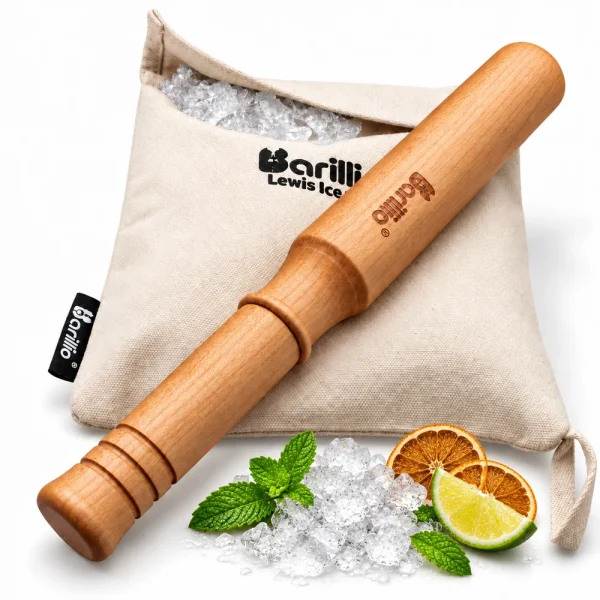
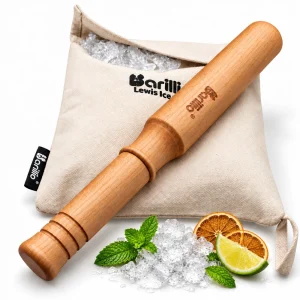
Start with a short menu rather than a long product checklist. A sour needs a shaker, jigger and strainer; a stirred Manhattan adds a mixing vessel and bar spoon; a Mojito may add a muddler. This makes a smaller kit with the right tools more useful than a larger kit padded with pieces that never leave the stand. It also reveals whether specialist tools can be added later without replacing the core set.
For gifting, the same rule applies: identify whether the recipient mixes at home, displays the tools or travels with them. A visible stand can make the gift feel complete on day one, while a bag is more useful for someone whose tools move between kitchens, parties or event venues.
The bartender kit buying guide compares tool functions in more detail. For event work, use the mobile bartender checklist to identify the supplies that do not appear in a normal product photo.
The practical decision
Choose the stand if the tools should remain visible, accessible and part of the bar’s presentation. Choose the bag if the set must move or disappear between uses. If you need both, buy for the primary workflow first and add storage later rather than forcing one product to solve two opposite jobs.