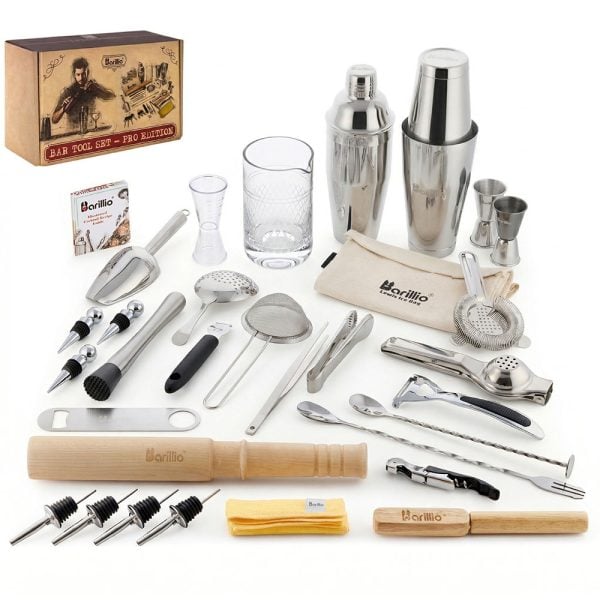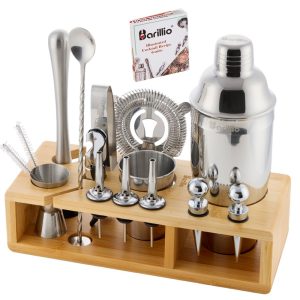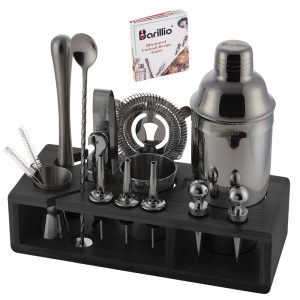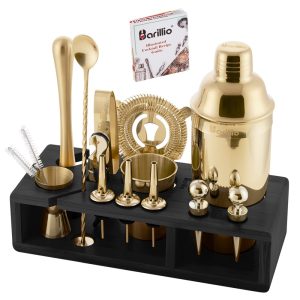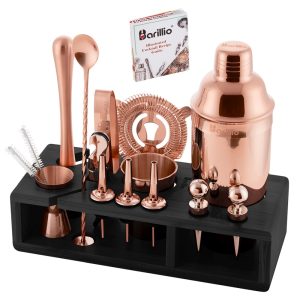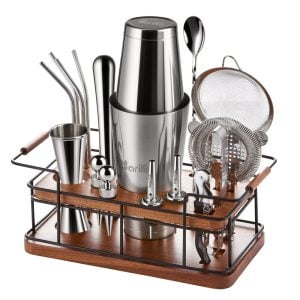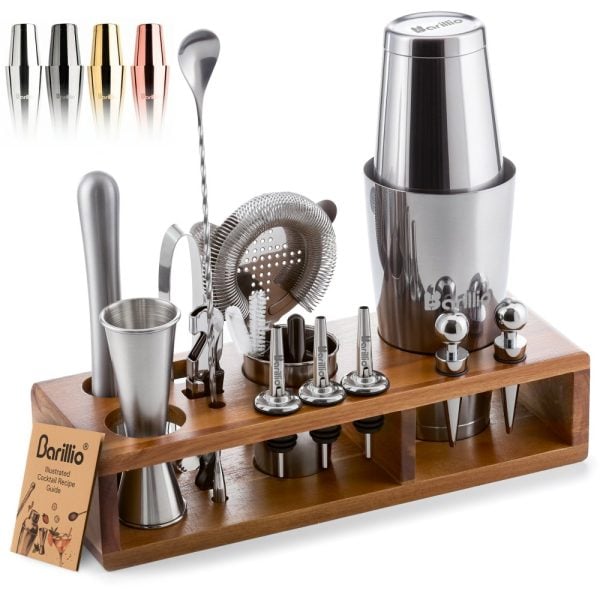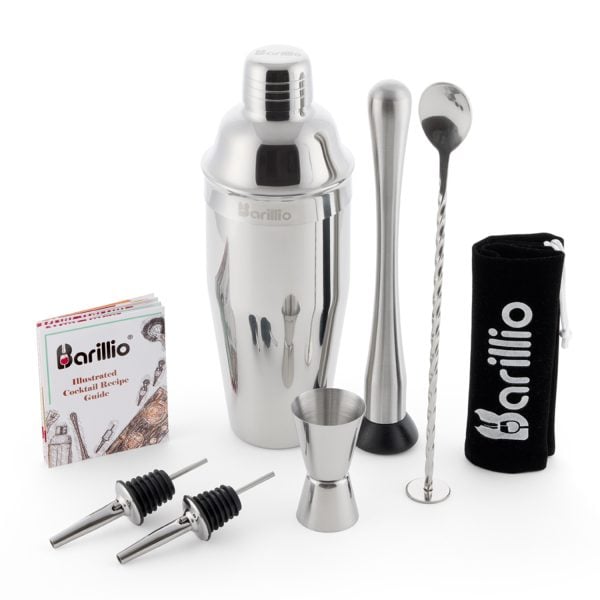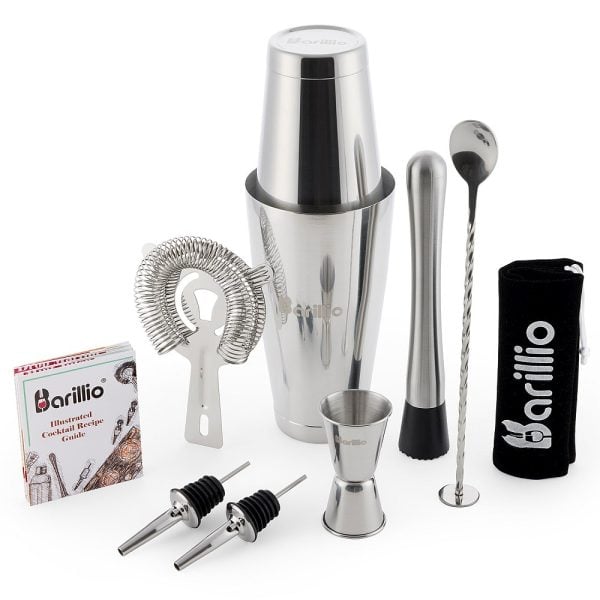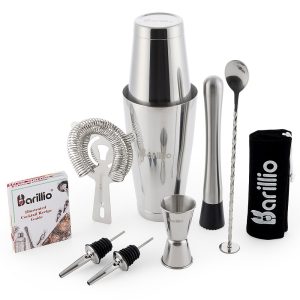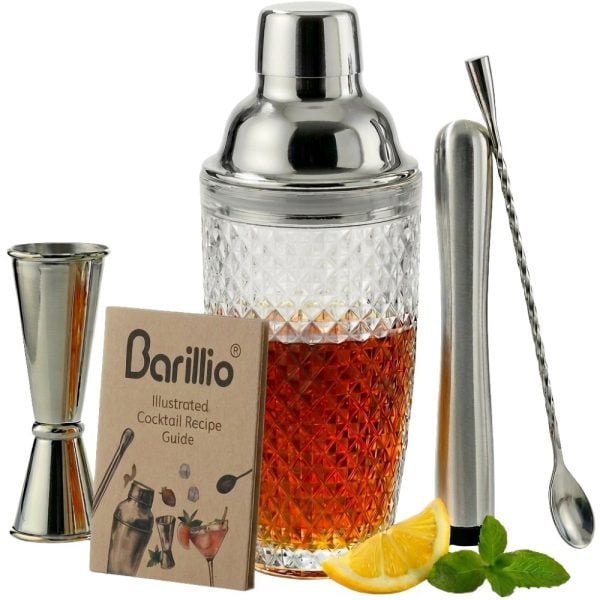
A shaker that leaks or refuses to open is usually giving feedback about the seal, temperature or how the pieces were joined. The fix depends on whether you are using Boston tins or a three-piece Cobbler shaker. Do not pry a rim with a knife, strike glass against a counter or twist metal pieces until they deform.
Problem: Boston tins will not open
Find the side where the rims begin to separate. Hold the larger tin securely and tap the side of the seal beside the tight point with the heel of your hand. The goal is to release the seal sideways, not pull the tins directly apart.
- Do not keep pounding the top after the seal is already formed.
- Do not twist the rims against each other.
- Warm the outside briefly with your hands if extreme cold has tightened the fit.
- If the tins are dented at the rim, stop and inspect them before the next use.
The Boston shaker technique guide shows the full sealing and opening sequence. A matched 18 oz and 28 oz weighted tin set should form a firm seal without needing excessive force.
Problem: the Boston shaker leaks
A leak often starts with a centered or shallow seal. Place the smaller tin at a slight angle, use one firm tap and test the connection before lifting. Wipe syrup or pulp from the rim, because residue can interrupt metal-to-metal contact. Do not overfill the larger tin; too little headroom increases pressure and splashing.
Problem: the Cobbler cap is stuck
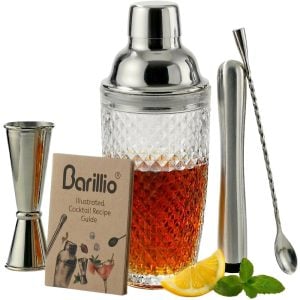
Cold metal can contract around the cap and strainer section. Hold the shaker upright, warm the cap with your hands and work it loose with controlled pressure. Avoid pliers or sharp tools, which can deform the cap and create a future leak. After service, clean sugar from the threads or contact surfaces before it dries.
Problem: the Cobbler lid leaks
- Check that the lid is seated evenly before adding the cap.
- Keep ice and fruit pieces away from the joining surfaces.
- Inspect the rim for a dent or distortion.
- Leave headroom instead of filling the body to the top.
- Replace a damaged part rather than increasing force.
Problem: the shaker becomes painfully cold
A metal shaker is supposed to become cold, but grip and duration still matter. Hold the body rather than the rim, keep the seal pointed away from faces and use a controlled motion. A towel can improve handling after the shake, but it should not hide a leak or loose seal.
Problem: the drink contains too many ice chips
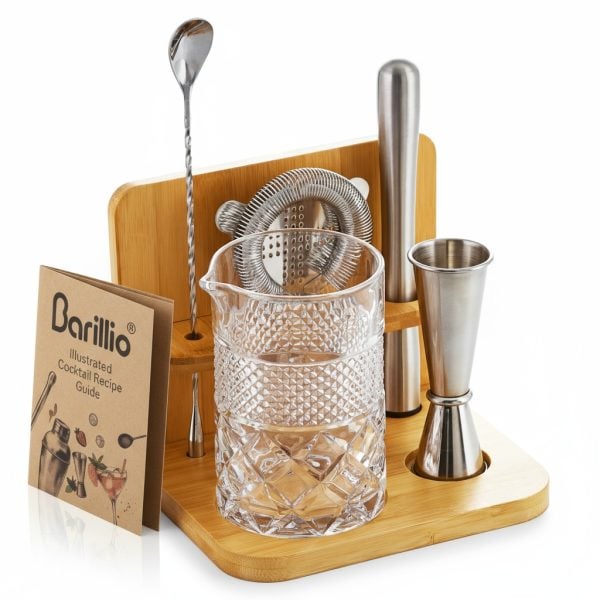
Use the correct strainer and control the gap. A Hawthorne spring catches larger ice fragments from a shaker; a second fine-mesh strain can remove smaller chips and pulp when the recipe calls for it. The Hawthorne, julep and fine-mesh guide explains the roles.
Problem: the shaker smells after washing
Disassemble every piece and clean the cap, built-in strainer holes or Hawthorne spring where residue can hide. Dry fully before reassembling or placing tools in a bag. Use the bar tool cleaning guide for stainless steel, glass, wood and canvas.
Prevent the same problem next time
Build a consistent sequence: inspect the rims, add ingredients before ice when the recipe allows, leave headroom, form one deliberate seal, and rinse immediately after straining. This removes several common causes at once and makes a genuine damaged-part problem easier to recognize.
When to stop using the shaker
Retire or replace a part if the rim is sharply dented, glass is chipped or cracked, a welded base becomes loose, or the pieces no longer align safely. Technique can solve a normal seal; it should not be used to work around physical damage.
Still deciding which design suits you? Compare Boston, Cobbler and glass shakers or browse the cocktail shaker set collection.