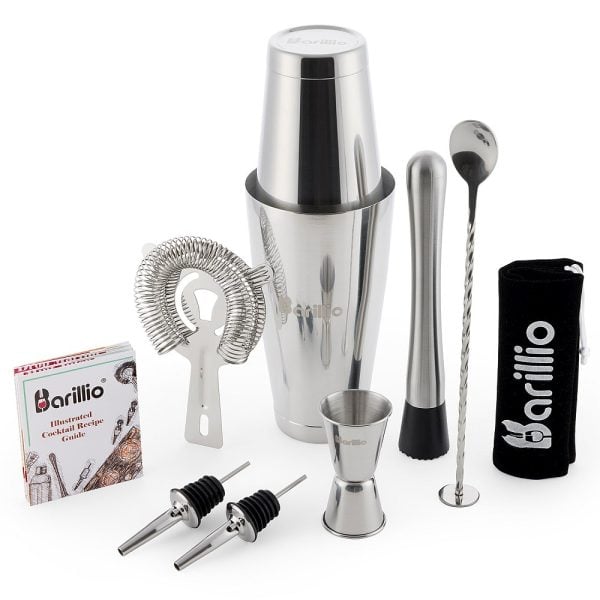
Boston shaker sizes can look like a simple capacity choice, but the numbers describe two pieces that work together. A common all-metal setup pairs a smaller 18 oz tin with a larger 28 oz tin. The small tin nests at an angle inside the large one, the rims create a seal, and the extra room lets liquid and ice move during the shake.
This guide explains what those capacities mean, how weighted and unweighted tins differ, and how to choose a set without treating the advertised ounce figure as a serving guarantee.
The common 18 oz and 28 oz Boston shaker pairing
| Tin | Role in the pair | Practical check |
|---|---|---|
| 18 oz tin | The smaller tin fits inside the larger tin to form the seal. | It should nest cleanly without disappearing too deeply into the larger vessel. |
| 28 oz tin | The larger tin holds the drink, ice and working space. | It should leave headroom instead of forcing the mixture against the rim. |
| 18 + 28 oz | The two tins become one shaker when sealed. | The seal should hold firmly and open with a controlled tap beside the tight point. |
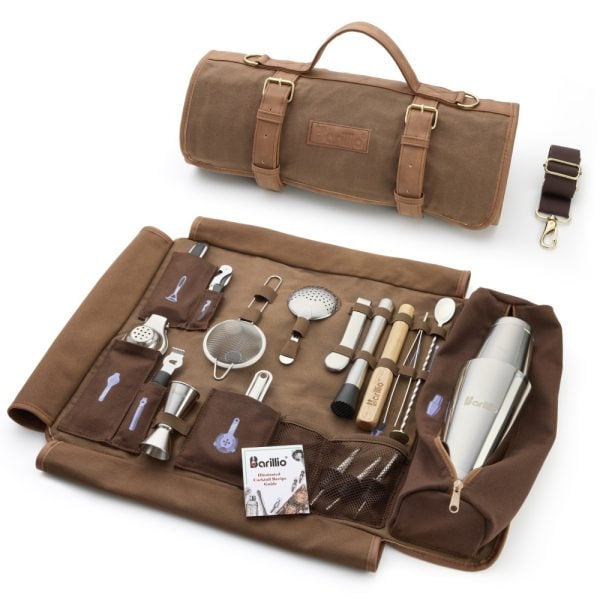
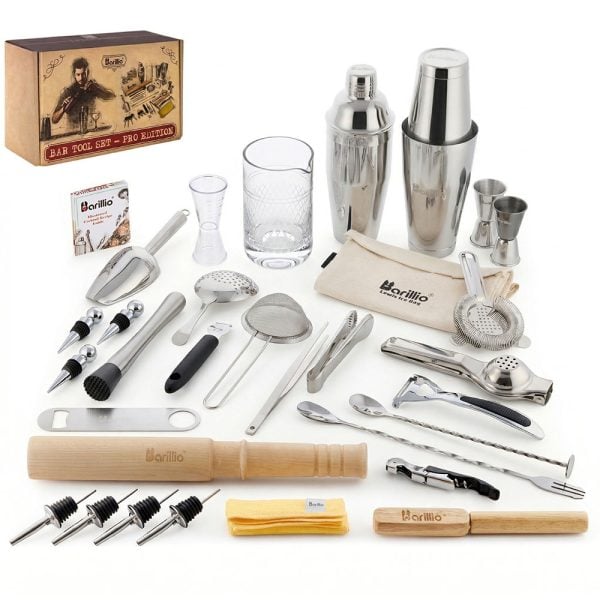
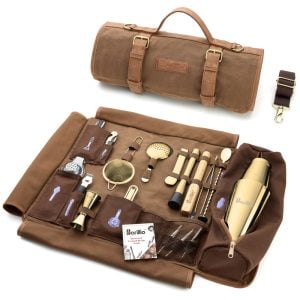
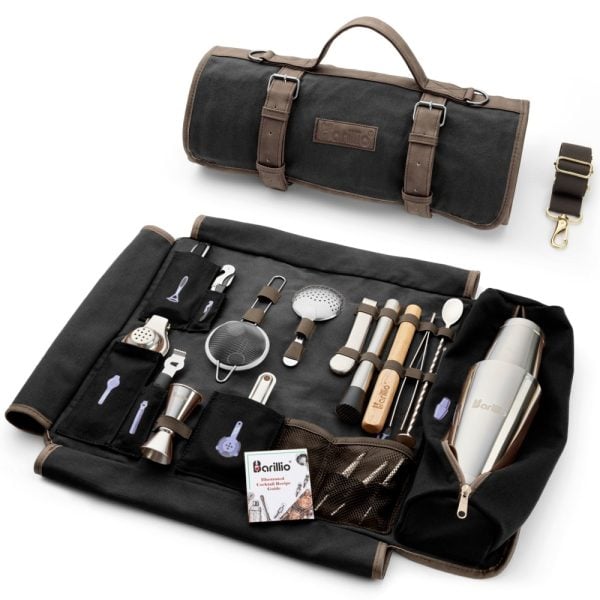
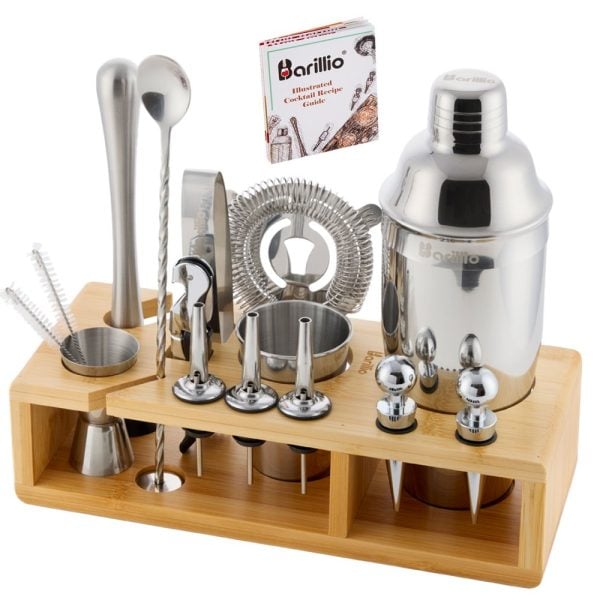
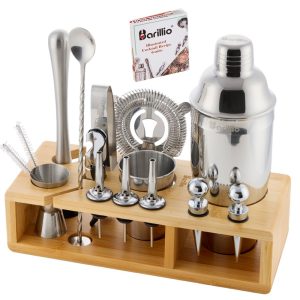
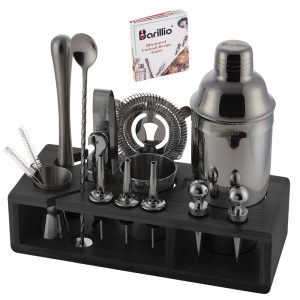
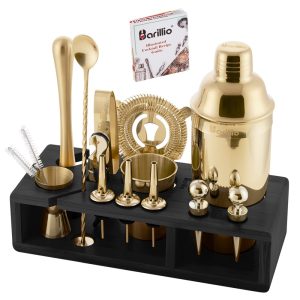
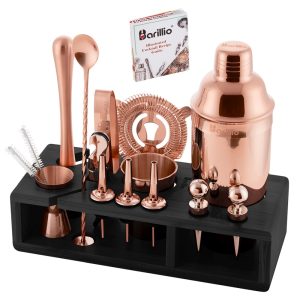
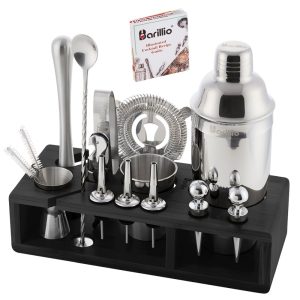
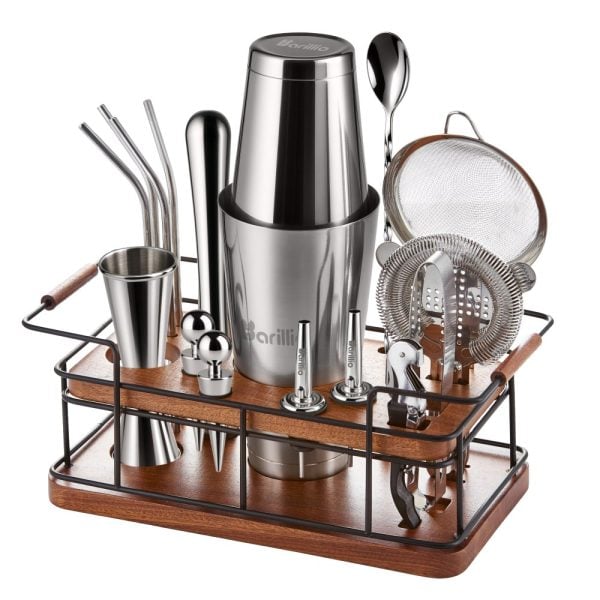
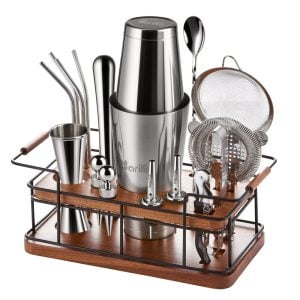
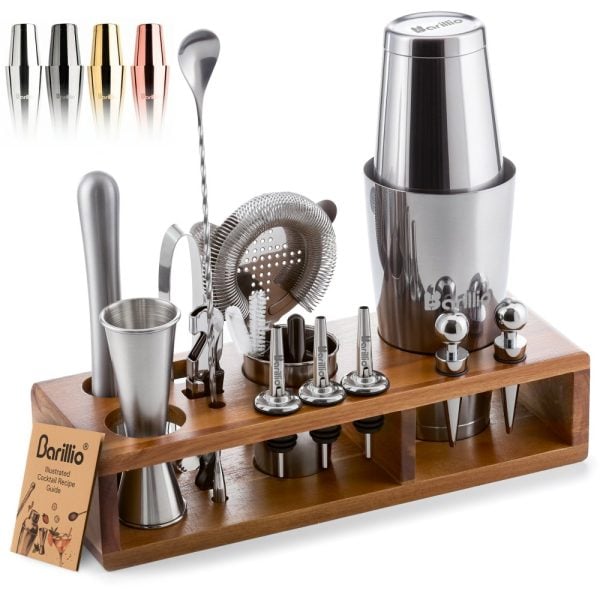
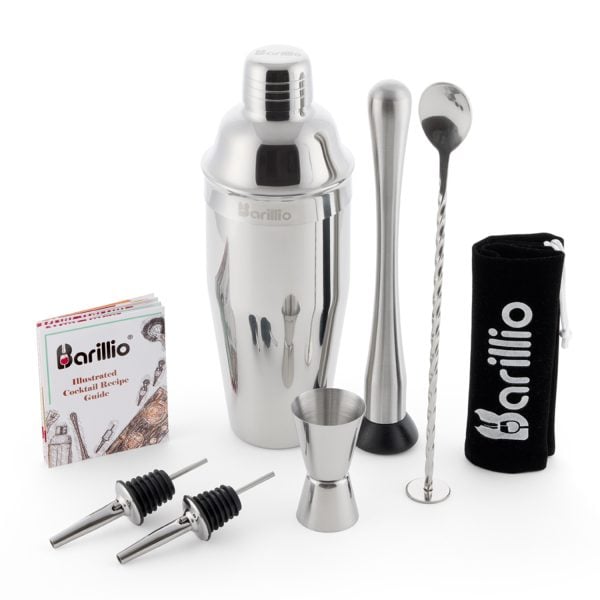
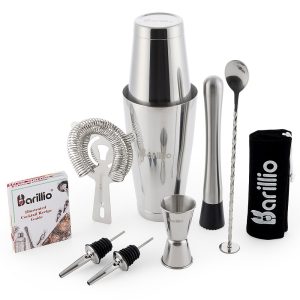
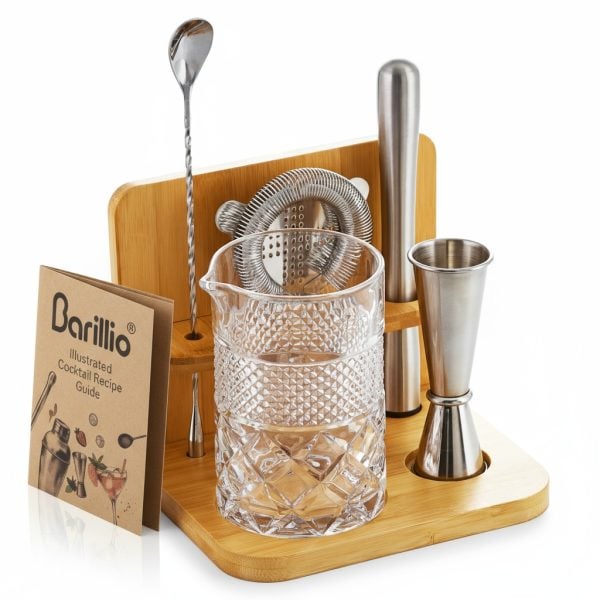
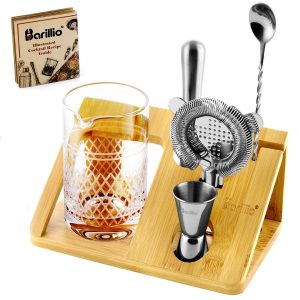
The Barillio weighted Boston shaker set uses this 18 oz and 28 oz format. It is also paired with a Hawthorne strainer because Boston tins do not have the built-in strainer found on a Cobbler shaker.
Does 28 oz mean the shaker makes several drinks?
No fixed serving count follows from the vessel capacity. A 28 oz tin is not meant to be filled to the rim. The recipe volume, ice size and room needed for movement all reduce the usable working space. A light highball build and a dense egg-white sour do not behave the same way even if their liquid measurements are similar.
Use the stated ounce capacity to compare vessel size, then follow the recipe and leave headroom. If you want to double a drink, first check whether the ice and liquid can still travel through the tins rather than assuming that two servings always fit.
Weighted vs unweighted Boston shaker tins
A weighted tin has extra mass at the base. An unweighted tin keeps the base lighter. Neither construction automatically makes better cocktails; the difference is balance, feedback and personal technique.
- Weighted tins can feel planted in the hand and provide a noticeable base during the shake.
- Unweighted tins feel lighter at the bottom and are preferred by some bartenders for speed and direct feedback.
- A mixed pair can work, but beginners usually learn faster when the tins are designed as a matched set.
- Rim shape, nesting depth and the quality of the seal matter more than choosing a style because it sounds professional.
Tin-on-tin or glass-on-tin?
A Boston shaker can pair two metal tins or use a glass vessel with a tin. Tin-on-tin is lighter and avoids handling a glass vessel during a vigorous shake. Glass-on-tin lets you see the contents but adds weight and requires extra care. A separate glass versus stainless-steel shaker guide covers the broader material choice.
How to seal and open the tins
- Add ingredients and ice to the larger tin unless the recipe directs otherwise.
- Place the small tin at a slight angle rather than directly centered.
- Use one firm tap to set the seal; repeated pounding makes opening harder.
- After shaking, locate the side where the two rims begin to separate and tap beside the tight point.
- Do not twist the rims or lever them apart with a knife.
For the complete technique, use the step-by-step Boston shaker guide. If you are still comparing systems, the Boston vs Cobbler comparison explains when an all-in-one lid and strainer may be easier.
Download the Boston shaker size chart
This printable keeps the key information on one page. The same information is available in the article text for screen readers and quick reference.

Which Boston shaker size should a beginner buy?
A matched 18 oz and 28 oz pair is a practical starting point because it is widely used, easy to understand and roomy enough for many standard recipes without being oversized. Choose a complete set when you also need a jigger and Hawthorne strainer; choose tins alone when those tools are already in your bar.