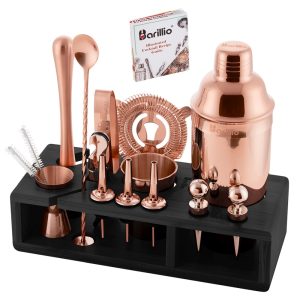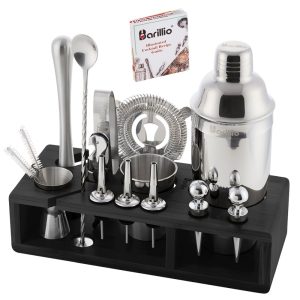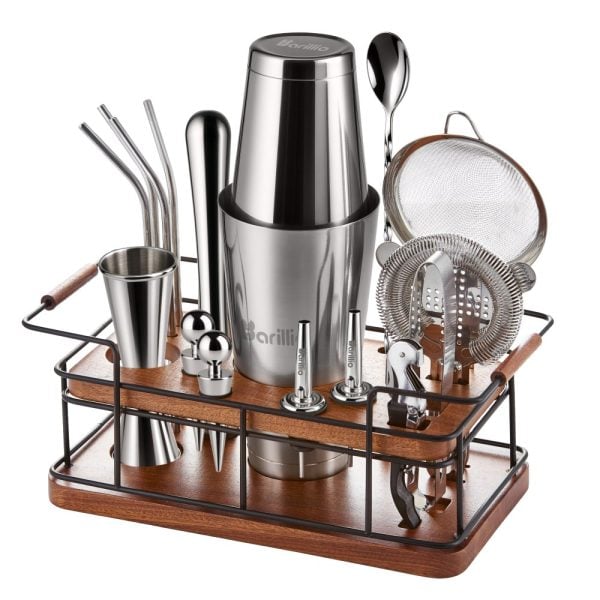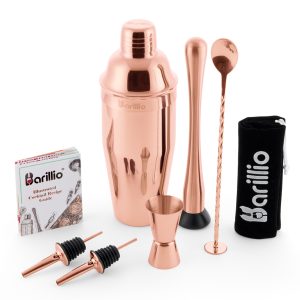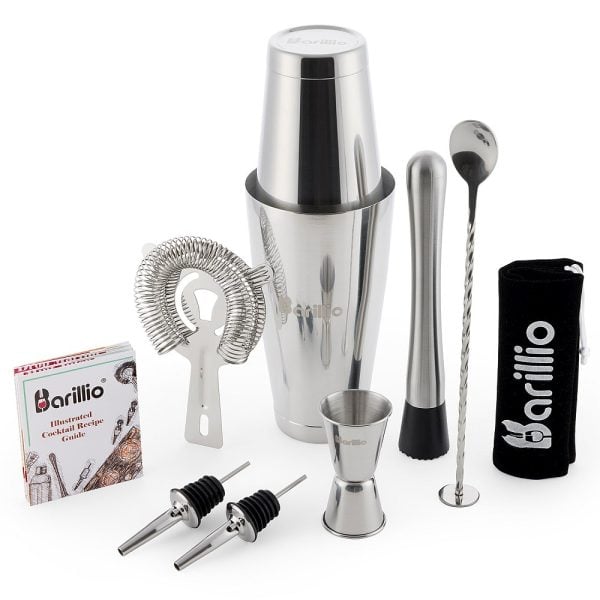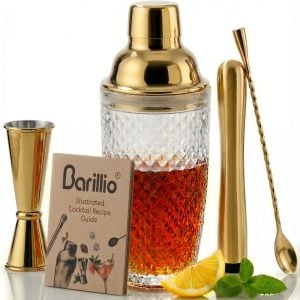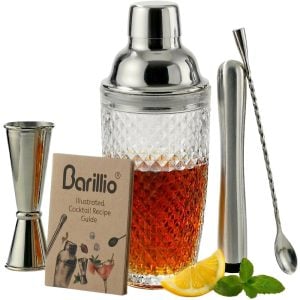
A mixing glass and a cocktail shaker both chill and dilute a drink, but they do not produce the same texture. Stirring moves the liquid smoothly around the ice. Shaking drives the drink through the ice with more force and introduces tiny air bubbles. The recipe’s ingredients and desired texture decide which tool belongs on the bar.
Use a mixing glass for clear, spirit-forward drinks
A mixing glass is usually chosen when the ingredients are mostly spirits, fortified wine or liqueur and the goal is a clear, silky texture. Many Martinis, Manhattans, Negronis and Old Fashioneds fit this pattern.
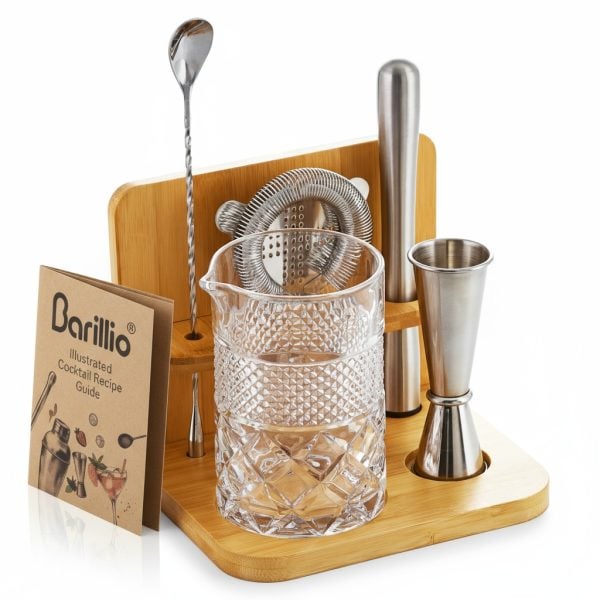
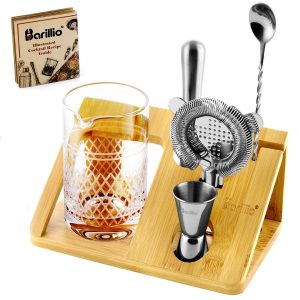
The clear walls of a crystal cocktail mixing glass make the movement and dilution visible. A weighted base helps the vessel stay planted while the spoon travels around the inside wall.
Use a shaker for citrus, dairy, egg or dense syrups
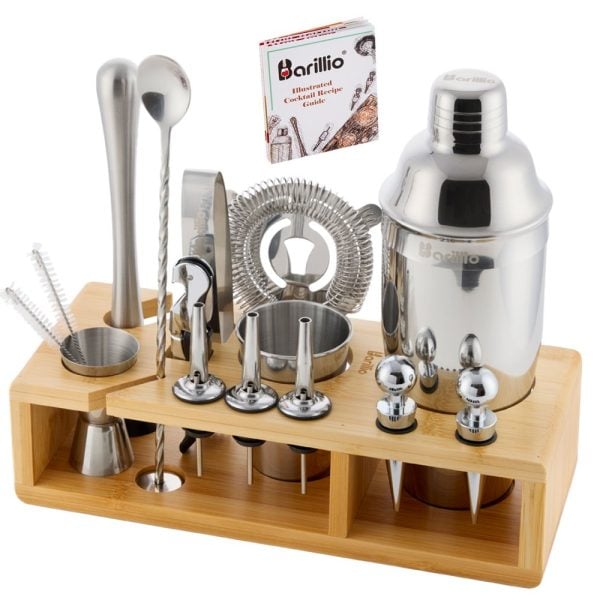
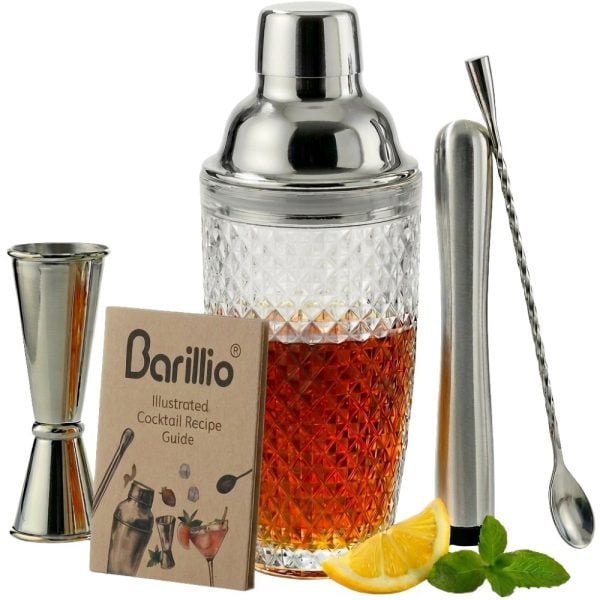
Shaking is useful when ingredients need aggressive mixing or aeration. Citrus juice, cream, egg white and thick syrups do not combine with spirits as readily as one clear liquid combines with another. The shaker also chills quickly because the drink repeatedly passes through and around the ice.
The texture difference
| Method | Typical result | Common use |
|---|---|---|
| Stir | Clearer appearance and smooth, dense texture | Spirit-forward cocktails |
| Shake | More aeration and a lively, cloudier texture | Citrus, dairy, egg and mixed-density ingredients |
| Roll or build | Gentler integration with less aeration | Recipe-specific long drinks and delicate builds |
Does shaking make a drink colder than stirring?
Both methods can chill a drink effectively. The result depends on ice, starting temperature, vessel, batch size and time. A fixed rule such as ‘always shake for exactly ten seconds’ ignores those variables. Watch the frost, feel the vessel and taste when learning a new setup.
Dilution is part of the recipe
Melting ice is not automatically a mistake. Water opens aromas, softens alcohol and brings the ingredients into balance. The goal is repeatable dilution: use similar ice, measure every ingredient and keep the method consistent before adjusting time. Small, wet ice usually melts faster than large, cold cubes, so a method that works in one kitchen may need a shorter stir or shake in another.
When testing, make the same recipe twice and change only one variable. Stir one version and shake the other, or keep the method and compare 20 oz versus 24 oz vessels. Side-by-side tasting exposes changes in texture and balance that are easy to miss when drinks are made hours apart.
Mixing glass size and headroom
A 20 oz glass is compact for many single drinks and modest two-drink builds. A 24 oz glass provides more working room. The stated capacity is not a target fill line; ice and liquid need enough space to move without spilling over the rim. Compare all 20 oz and 24 oz mixing glass formats before choosing a vessel-only or stand set.
What strainer belongs with each tool?
A mixing glass is commonly paired with a julep or Hawthorne strainer depending on the vessel and preference. A Boston shaker normally uses a Hawthorne strainer after the tins are separated. A Cobbler shaker has a built-in strainer, although a fine-mesh strainer can be added when the recipe calls for fewer ice chips or fruit particles. The cocktail strainer guide compares all three.
A simple decision rule
- Mostly clear alcoholic ingredients and a silky target texture: start by stirring.
- Citrus, dairy, egg or ingredients with very different densities: start by shaking.
- A recipe gives a specific method: follow it before experimenting.
- If you change the method, compare the texture and dilution rather than judging only temperature.
For a deeper technique guide, read Stirred, Not Shaken. If you are choosing a shaker system, compare Boston, Cobbler and glass cocktail shakers.