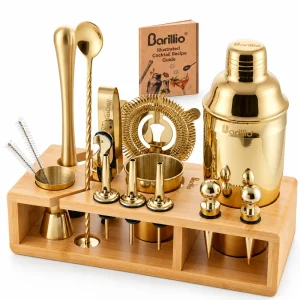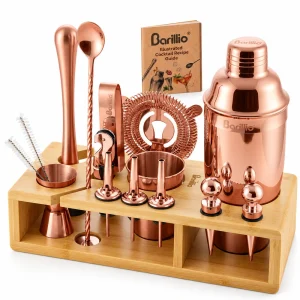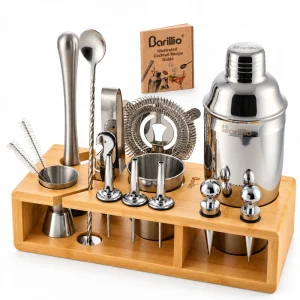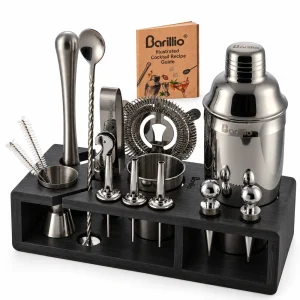
A cocktail mixing glass is built for drinks that need chill and dilution without the texture created by shaking. It gives the spoon room to travel smoothly around the ice, makes the dilution easy to watch, and pours neatly through a strainer.
The details—capacity, weight, wall shape, and spout—matter more than decoration. This guide explains what to look for and how to use a mixing glass without overcomplicating the technique.
When should you use a mixing glass?
Stir cocktails made mainly from spirits, fortified wines, and other clear ingredients when you want a smooth, clear result. An Old Fashioned, Manhattan, or spirit-forward Martini variation is a familiar example. Drinks containing citrus juice, cream, egg, or other ingredients that need vigorous integration are generally shaken instead.
There are exceptions and personal preferences, so the recipe is still your best starting point. Our guide to shaken versus stirred cocktails explains what each method changes in the glass.
20-ounce versus 24-ounce mixing glasses
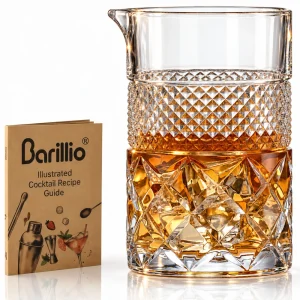
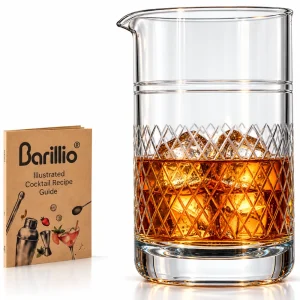
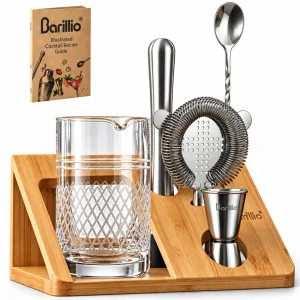
A 20-ounce mixing glass is comfortable for most single drinks and many two-drink pours, depending on the recipe and ice. It is compact, easy to control, and leaves useful room above the liquid. The Barillio crystal cocktail mixing glass has a 20-ounce capacity.
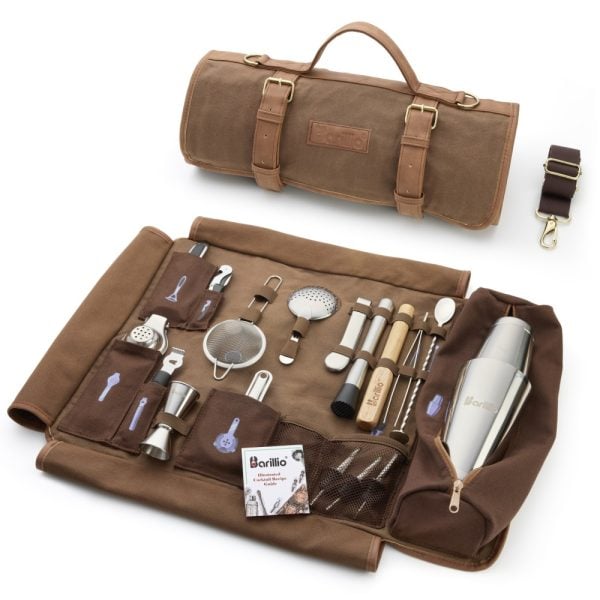
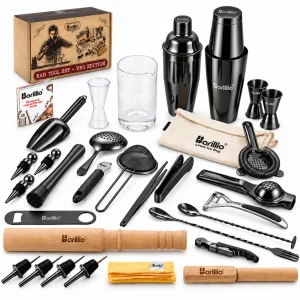
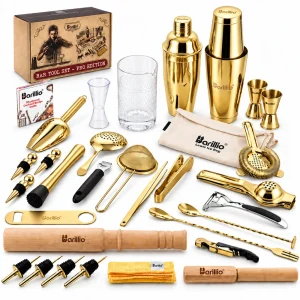
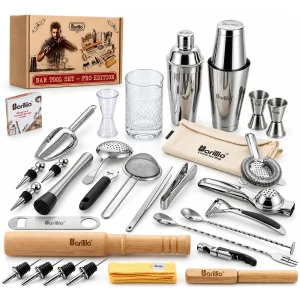
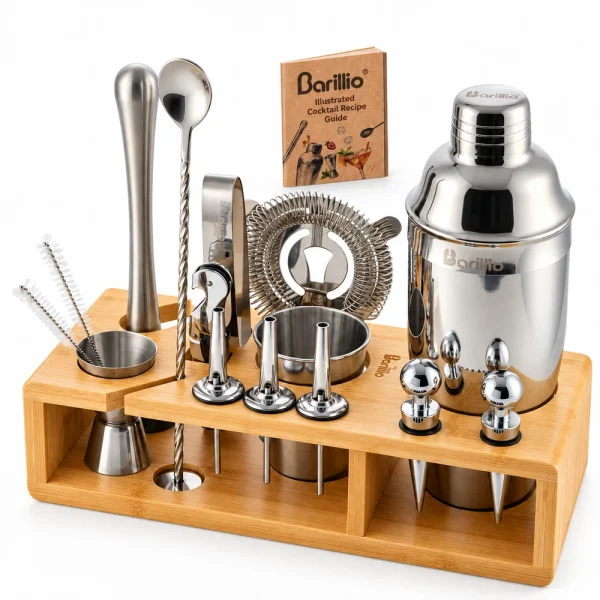
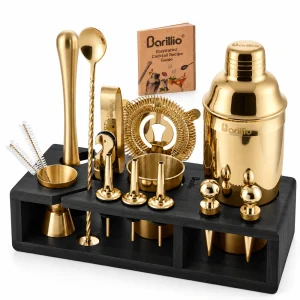
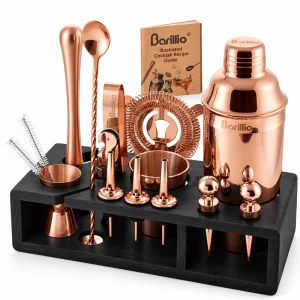
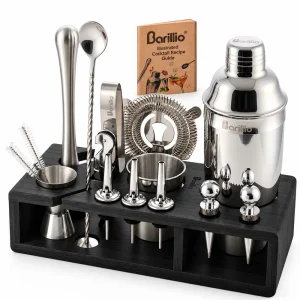
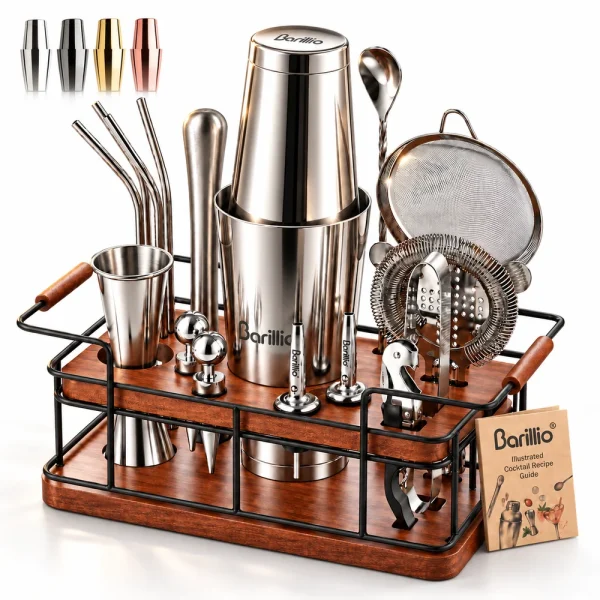
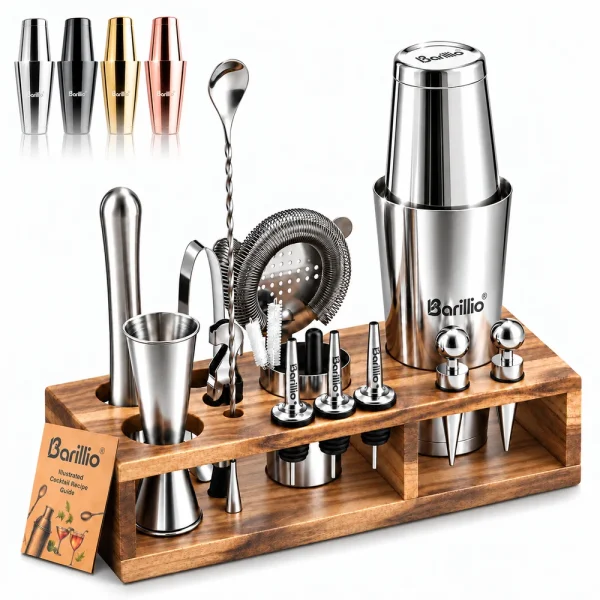
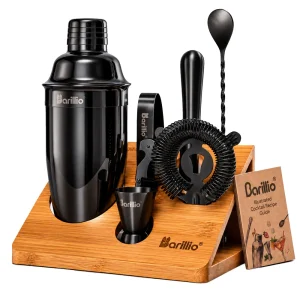
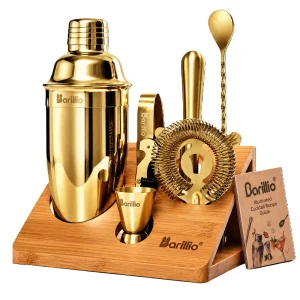
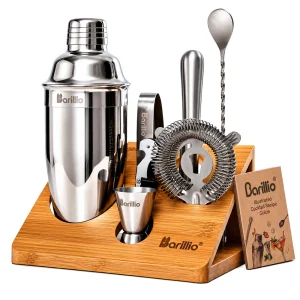
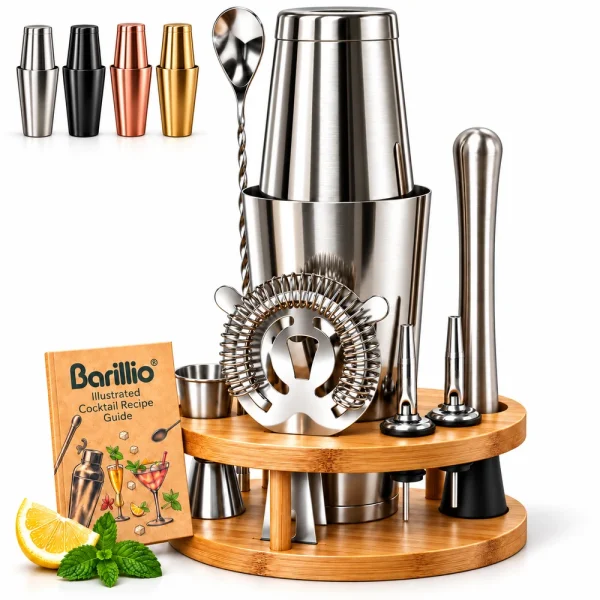
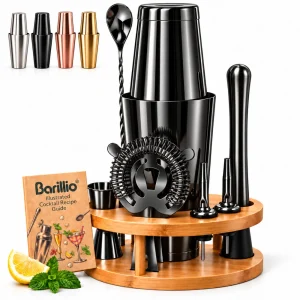
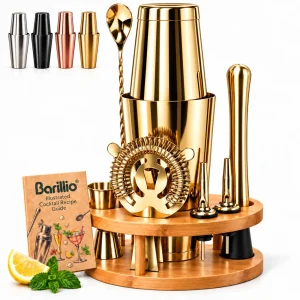
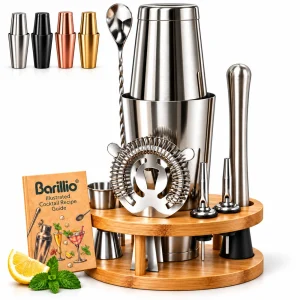
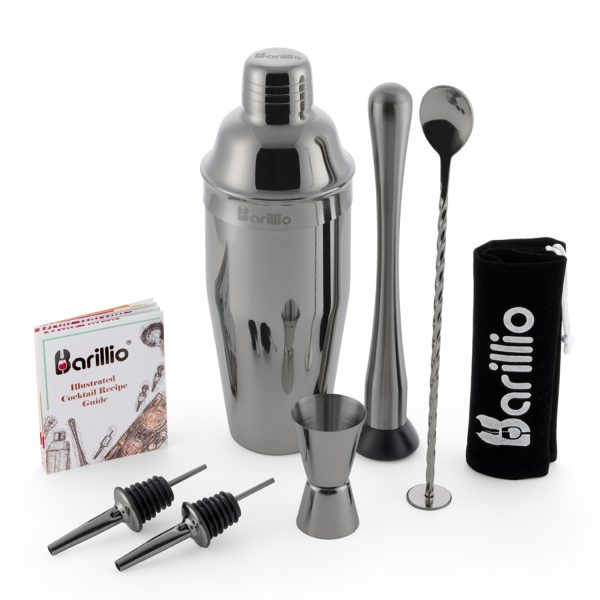
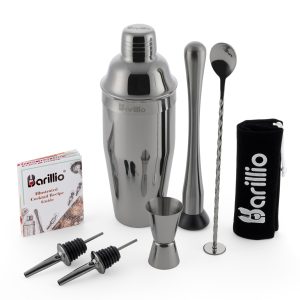
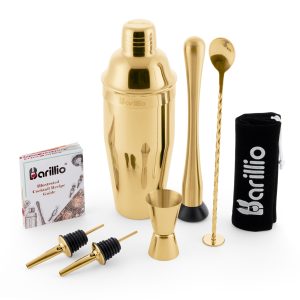
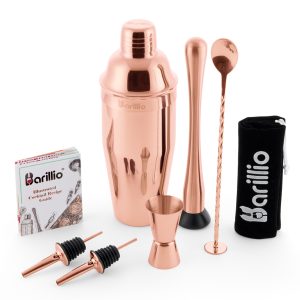
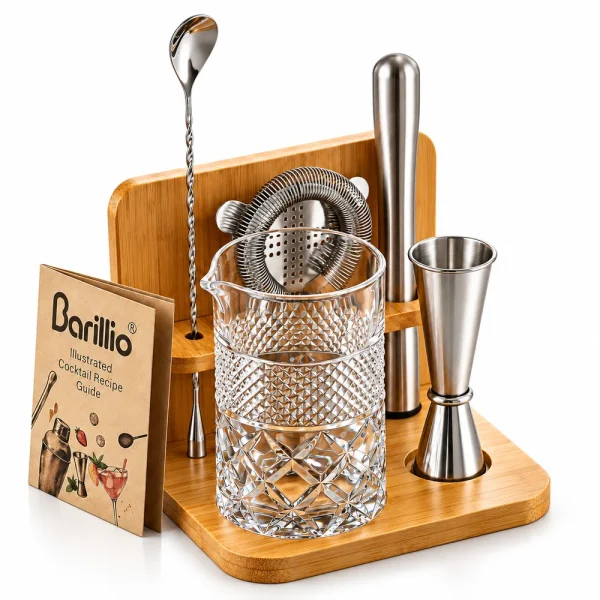
A 24-ounce glass gives more headroom for large cubes or a deliberate two-drink batch. Barillio’s 24-ounce mixing glass set is designed to handle two drinks and includes the supporting tools. More capacity is useful, but an oversized vessel is not automatically better for one small drink—the ice should still move as a controlled mass rather than scatter around an almost empty bowl.
| Capacity | Best suited to | Trade-off |
|---|---|---|
| Around 20 oz | Single cocktails and compact home bars | Less spare room for large two-drink batches |
| Around 24 oz | Large ice and batching two drinks | Slightly heavier and takes more storage space |
What shape works best?
- A heavy base keeps the glass planted while the spoon moves.
- Straight or gently angled walls help the spoon follow a smooth circular path.
- A wide, stable opening makes it easier to add ice and work with a julep strainer.
- A defined pouring spout gives better control and reduces drips.
- A comfortable diameter matters: too wide and the ice scatters; too narrow and the spoon catches.
Glass or metal?
Glass lets you see the ice, dilution, and liquid level. Its weight feels stable and the vessel can double as an attractive part of a home-bar setup. Metal is lighter and less vulnerable to breakage, and it changes temperature quickly. Both can make an excellent drink; choose glass for visibility and presentation, metal for durability and portability.
How to use a cocktail mixing glass
- Measure the ingredients into the mixing glass with a jigger.
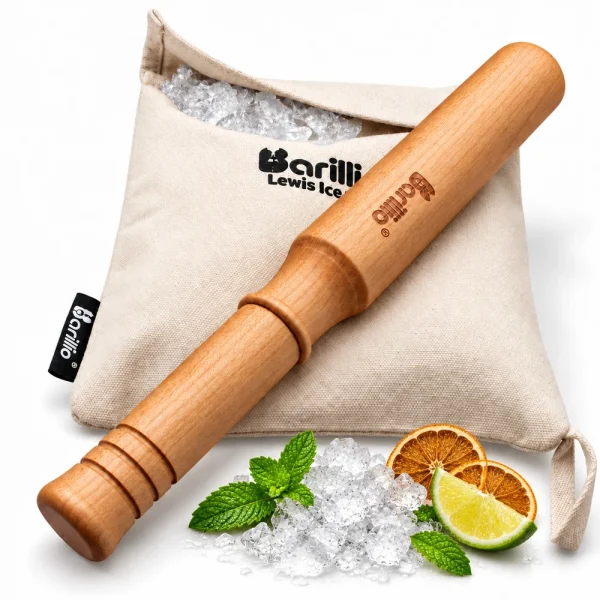
- Add enough cold, solid ice for the cubes to move together. Wet or crumbling ice dilutes unpredictably.
- Place the back of the spoon against the inner wall and guide it around the perimeter rather than whipping through the center.
- Watch and taste. Stirring time changes with the ice, room temperature, recipe, and batch size; a fixed number of seconds is only a rough cue.
- Place a julep strainer over the glass and pour through the spout into the prepared serving glass.
Measure before you add the ice so small pours do not disappear between cubes. If ounce and milliliter markings are causing confusion, use the cocktail jigger measurement chart.
How much ice should you use?
Use enough to chill efficiently and rotate as one group, while leaving room for the spoon and liquid. A nearly empty mixing glass tends to move the ice awkwardly; an overfilled one can spill. Large, cold cubes usually remain intact longer than small wet fragments. The goal is not to avoid dilution—water is part of the finished drink—but to make it controlled.
Common mixing-glass mistakes
- Stirring with too little ice, which warms and dilutes unevenly
- Using a spoon that is too short to control comfortably
- Crashing the spoon through the ice instead of guiding it around the wall
- Filling to the rim and leaving no space to move
- Pouring without a suitable strainer and carrying ice chips into the drink
- Subjecting warm glass to sudden extreme temperature changes
Care and storage
Follow the care instructions for your specific glass. Rinse away sugary residue promptly, use a non-abrasive sponge when hand washing, and let the vessel dry before it goes back on a stand or shelf. Store it where the rim and spout cannot be knocked by heavier tools.
A mixing glass works best as part of a small system: a readable jigger, a long bar spoon, a julep strainer, and good ice. The essential bar accessories guide can help fill any gaps without adding tools you will rarely use.