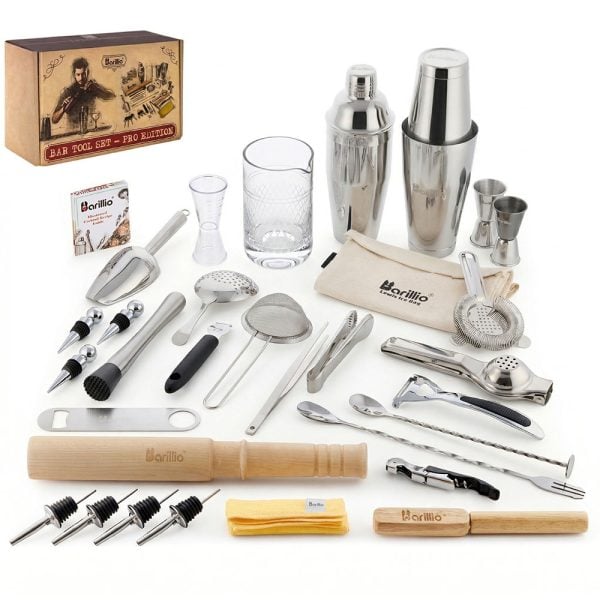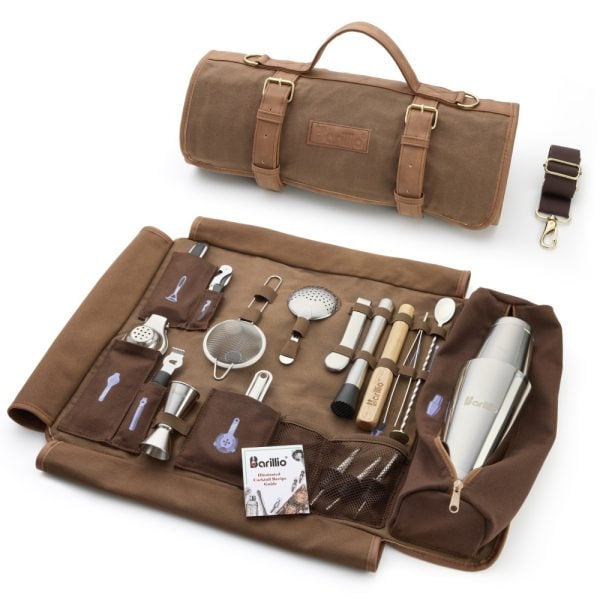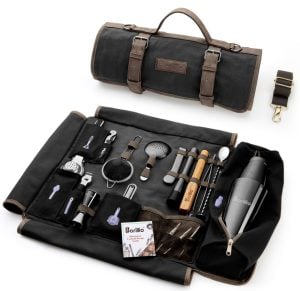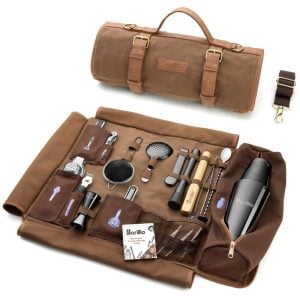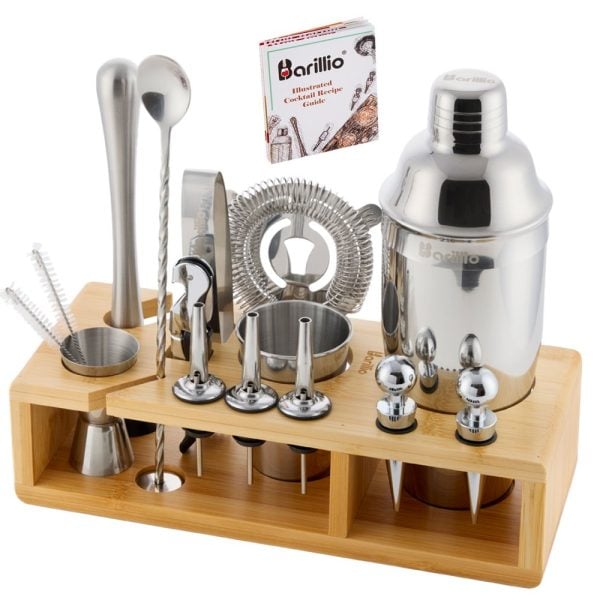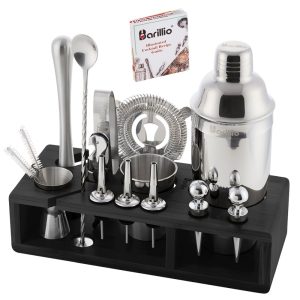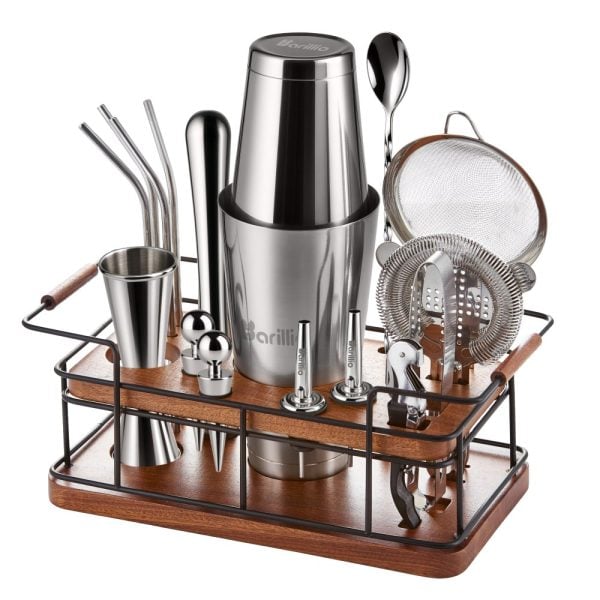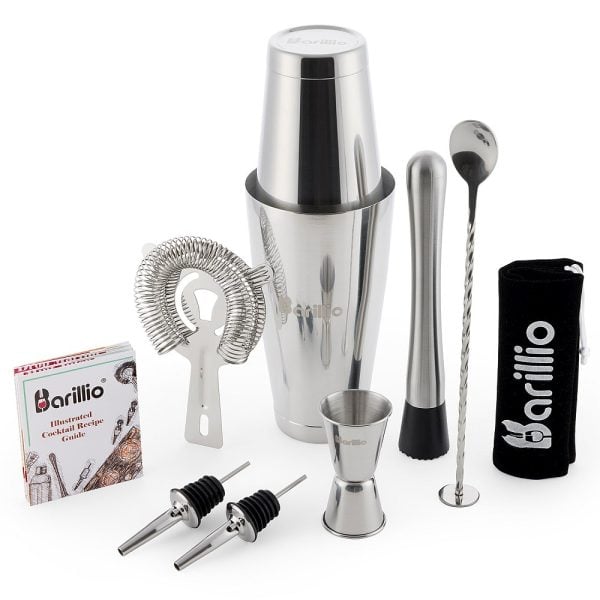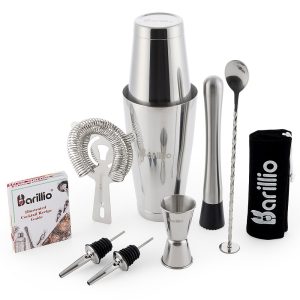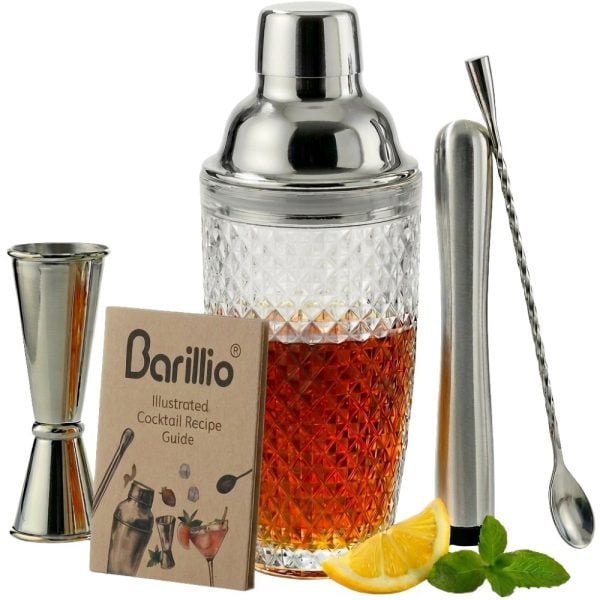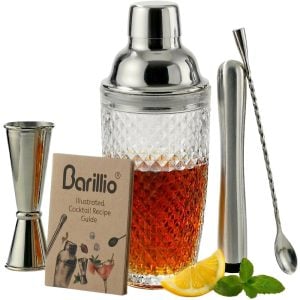
A cocktail strainer stops the mixing ice at the moment the drink has reached the chill and dilution you want. The three common styles—Hawthorne, julep, and fine mesh—look different because they solve different pouring problems.
You do not need all three on day one. Match the first strainer to the vessel you use most, then add a fine-mesh strainer if the recipes you make leave small pieces of ice, fruit, or herbs behind.
The quick answer
| Drink or vessel | Primary strainer | Fine-mesh finish? |
|---|---|---|
| Shaken drink in a Boston shaker | Hawthorne | Useful for pulp, herbs, egg white, or ice chips |
| Stirred drink in a mixing glass | Julep | Usually unnecessary |
| Cobbler shaker | Built-in strainer | Optional for a cleaner pour |
| Muddled fruit or herbs | Hawthorne | Usually helpful |
Hawthorne strainer: the most versatile first choice
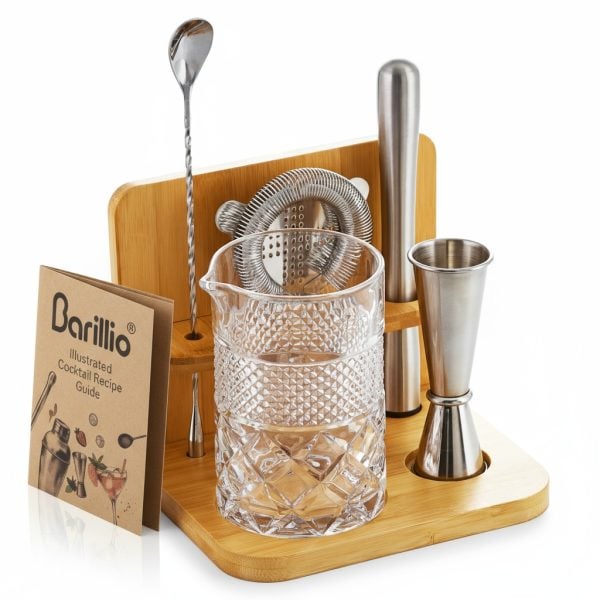
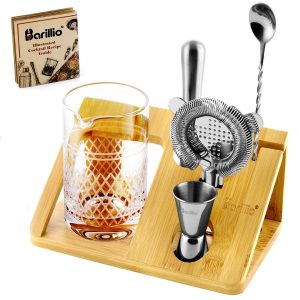
A Hawthorne strainer has a flat perforated head surrounded by a coiled spring. The spring sits against the inside edge of a shaker tin, holds back the main ice, and gives you some control over the flow.
Use it for shaken cocktails made in a Boston shaker, including drinks with citrus juice, syrup, cream, or egg white. The broad head should cover the tin opening, and the spring should make even contact without falling deep into the vessel.
- Place the spring toward the drink.
- Rest your index finger on the top to keep the strainer steady.
- Pour smoothly instead of tipping the tin all at once.
- Press slightly toward the opening for a finer “closed gate” pour, or relax the pressure for a faster flow.
Julep strainer: designed for a mixing glass
A julep strainer resembles a shallow perforated spoon. Its curved bowl fits inside a mixing glass and holds back the large cubes while a clear, stirred drink flows through the holes.
It is traditionally paired with Martinis, Manhattans, Negronis, Old Fashioneds, and other stirred cocktails. A Hawthorne strainer can work with many mixing glasses, so a julep strainer is an upgrade rather than a requirement for every home bar.
If stirred drinks are a regular part of your routine, our cocktail mixing glass guide covers vessel size, ice, stirring, and pouring technique.
Fine-mesh strainer: the second filter
A small fine-mesh strainer is normally held beneath the primary strainer as the drink enters the serving glass. This is called double-straining. The Hawthorne or julep holds back the large ice; the mesh catches smaller ice shards, citrus pulp, seeds, and herb fragments.
Double-strain when the texture benefits from it, especially after muddling berries or herbs or shaking a drink with pulpy juice. It is not automatically better for every cocktail. A rustic crushed-ice drink, for example, may be intended to keep some of that texture.
How to double-strain without making a mess
- Place the primary strainer over the shaker or mixing glass.
- Hold the fine-mesh strainer above the serving glass, not resting on its rim.
- Begin with a slow pour so the mesh does not overflow.
- Move the small strainer slightly if liquid pools in one spot.
- Rinse the mesh immediately after pouring; dried citrus and egg residue are harder to remove.
What to check before choosing a strainer
- Fit: the strainer must cover the actual shaker or mixing glass you own.
- Spring tension: a Hawthorne spring should sit evenly and return to shape after cleaning.
- Handle control: the tool should balance comfortably when you press it with one finger.
- Edges and welds: they should be smooth, with no sharp points or loose pieces.
- Cleaning: the spring should be removable if the manufacturer intends it to be, and the fine mesh should rinse clean easily.
Common straining mistakes
- Using only a fine-mesh strainer for a shaker full of ice, which clogs the mesh and slows the pour.
- Holding the Hawthorne spring away from the drink.
- Letting the strainer slide because no finger is securing it.
- Forcing a strainer onto a vessel it does not fit.
- Double-straining every drink even when the intended texture does not call for it.
Which strainers belong in a first bartender kit?
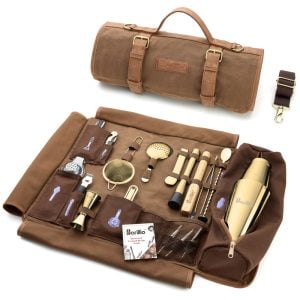
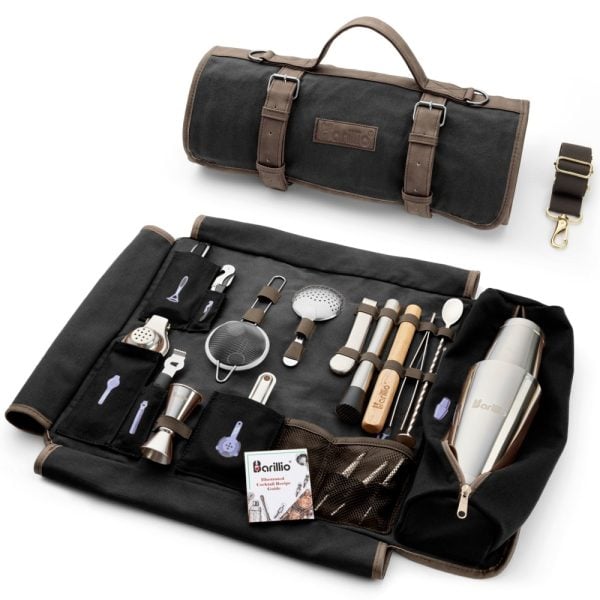
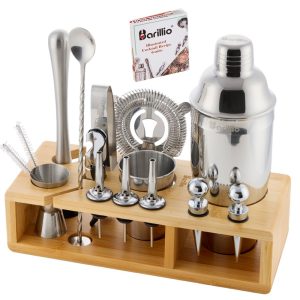
For a compact beginner setup, start with a Hawthorne strainer and add a fine-mesh strainer if you make citrus sours or muddled drinks. Add a julep strainer when a crystal cocktail mixing glass becomes part of your regular routine.
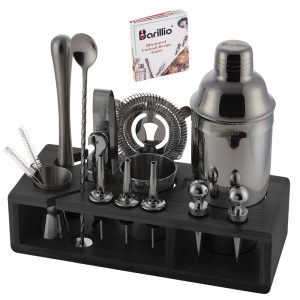
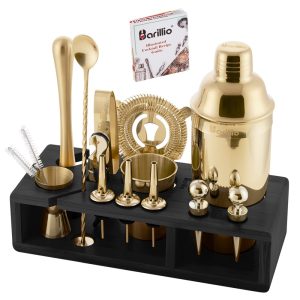
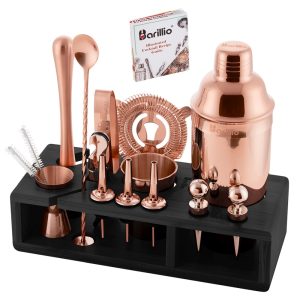
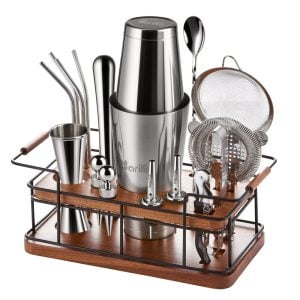
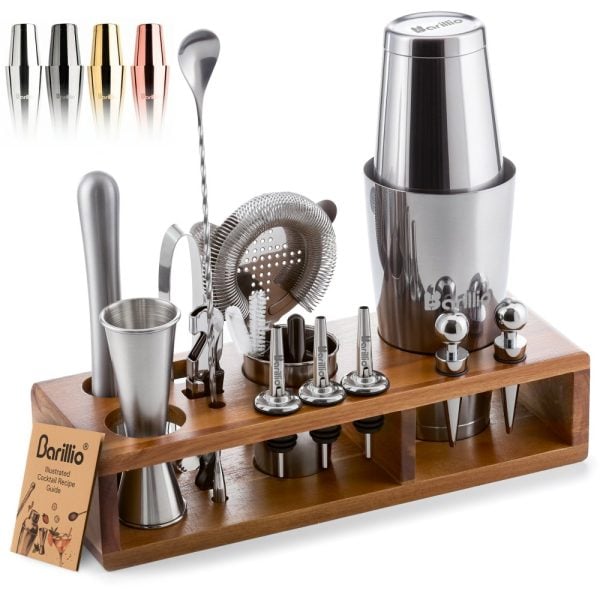
Many complete bartender kits include more than one strainer so the tools work across shaken and stirred recipes. The useful test is not the total piece count; it is whether each strainer fits the vessel it is meant to serve.